Apple is working on a wearable AI device in the form of a pin or pendant the size of an AirTag. The gadget is equipped with a camera, microphone, and is designed for deep integration with the updated Siri. And this is in addition to AirPods Ultra with cameras and AI, which are expected to launch this year. If development isn’t shelved, the device could appear as early as 2027. Here’s what we know so far and whether this gadget is worth waiting for.
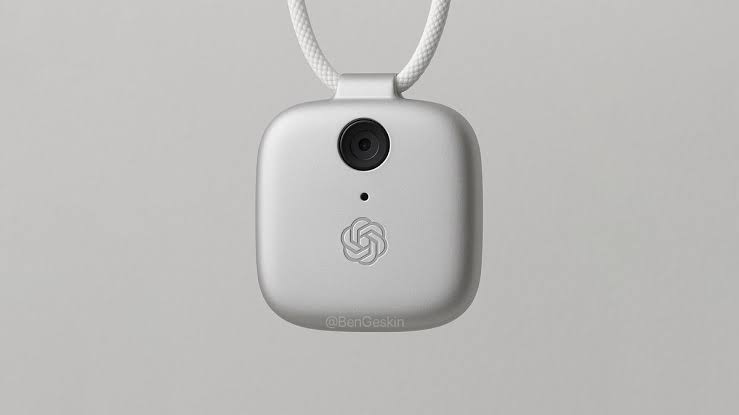
Apple is preparing a response to OpenAI’s yet-unreleased device. Image: phonearena.com
What Is the Apple AI Pin and What Does It Look Like
According to available rumors, the device is a thin flat disc, similar in size to an AirTag, with an aluminum and glass body and a physical control button on the side. Apple wants to make the final version roughly the same size as an AirTag, but due to the internal components, it will be slightly thicker.
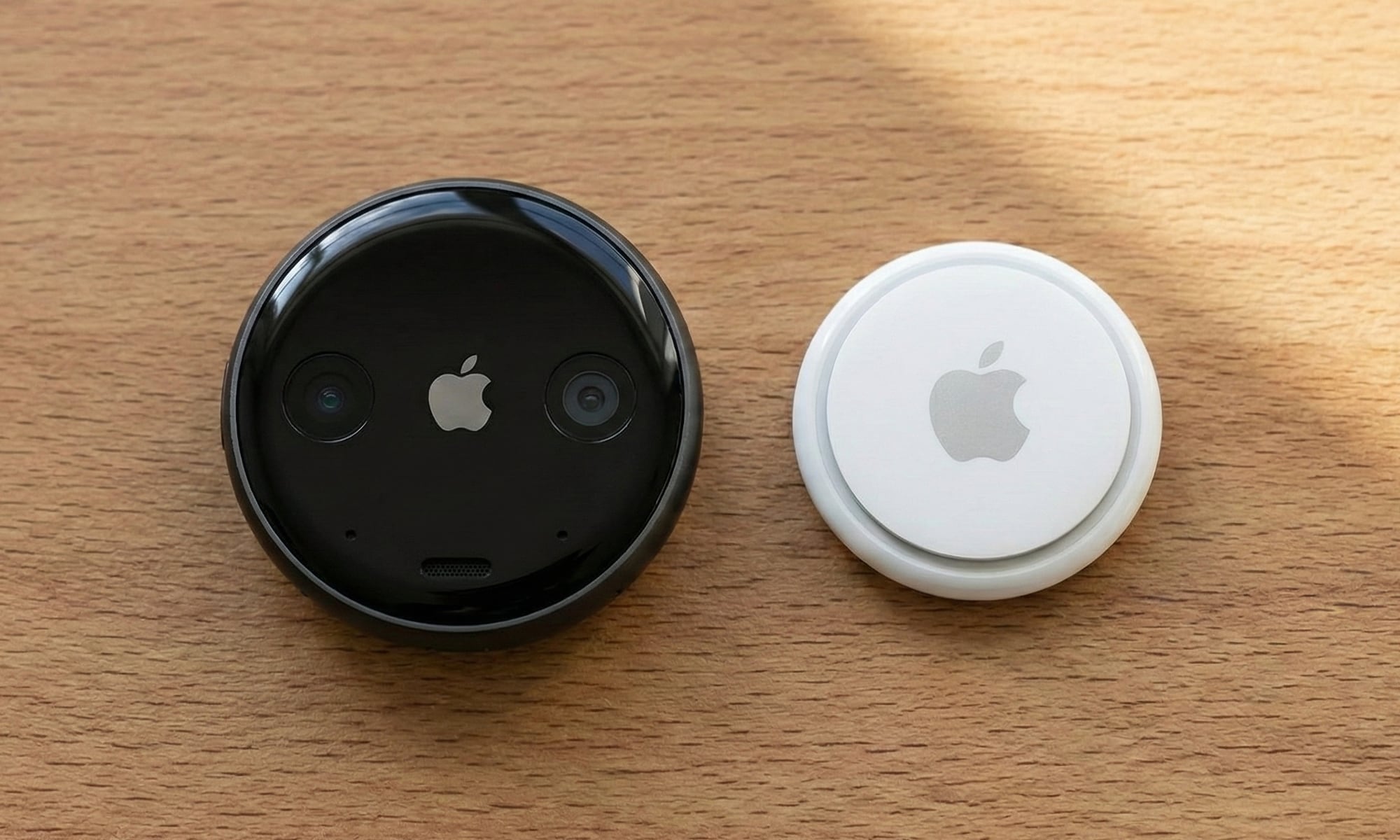
In some ways, the new device will resemble the AirTag. Image: idropnews.com
It can be worn in different ways: attached to clothing or a bag with a clip, or hung around the neck as a pendant — there’s a hole in the body for that purpose. The device charges wirelessly, like Apple Watch.
In terms of form factor, it’s something between an AirTag and a brooch. The gadget has no screen — all interaction happens through voice and the camera.
The Camera in Apple AI Pin: Why It’s There and What It Can Do
Apple plans to equip the AI Pin with a camera, but information about its capabilities is contradictory. According to Bloomberg, the camera will be low-resolution — it’s not meant for photos and videos but to give the AI visual information about the surroundings. The camera works constantly, recording what happens around the owner.
The Information, on the other hand, reports two front-facing cameras — a standard one and a wide-angle one — for taking photos and videos. Which version will be final is still unknown.
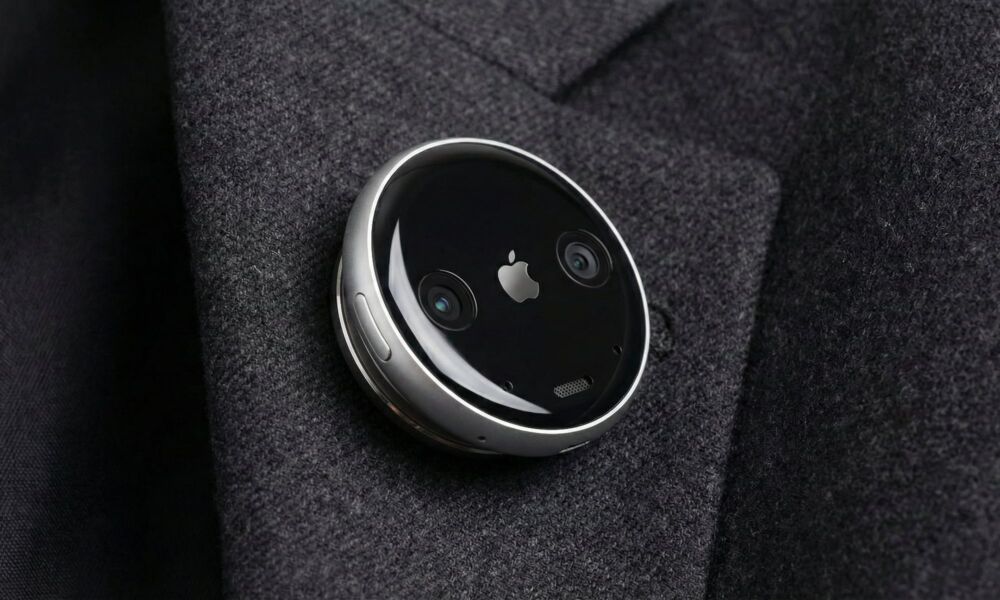
The camera is needed to read everything around you. Image: idropnews.com
The main use case for the camera is the Visual Intelligence feature, which currently works on iPhone 15 Pro and newer: it allows you to learn more about places and objects around you through the camera, summarize text, translate it, search for products on Google, and ask ChatGPT questions. Essentially, the AI Pin should become the “eyes” of this feature that you don’t need to pull out of your pocket every time.
Siri Powered by Gemini — The Key Technology for the AI Pin
The entire purpose of the AI Pin is tied to the updated Siri that Apple is preparing to launch. Apple is testing a separate Siri app, a new chatbot-style interface, and all of this is planned to be revealed on June 8 at WWDC as part of iOS 27 and macOS 27.
At the core of the updated Siri lies a multi-year partnership with Google: Apple will use Gemini models and Google’s cloud technologies for its foundational AI models. Apple has gained full access to the Gemini model in its own data centers and is using it to create compact models that can run directly on devices — faster and without a constant internet connection.
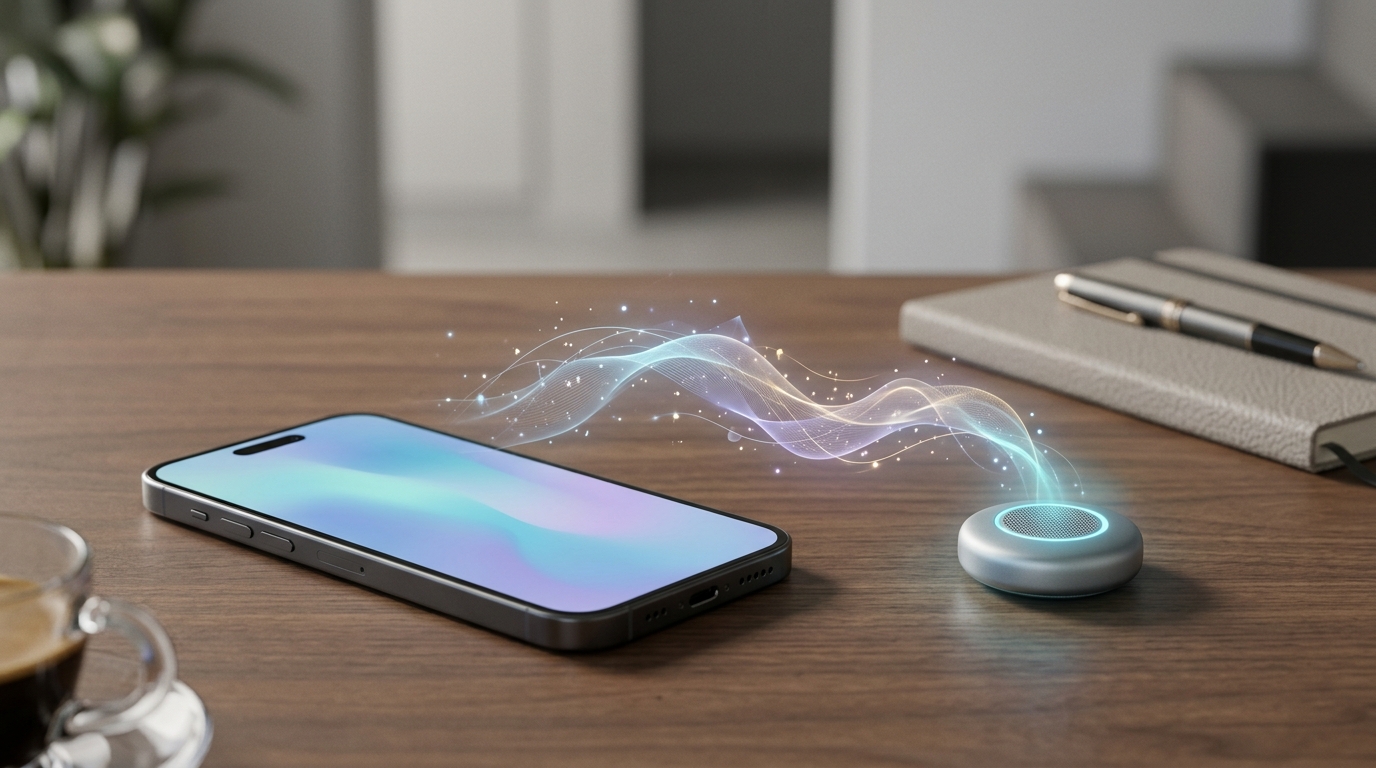
The AI Pin is designed as a voice interface for the updated Siri
Simply put, the new Siri under the codename Campos is a full-fledged chatbot that supports voice and text, remembers conversation context, handles follow-up questions, and is deeply integrated into apps. It’s this Siri that should “bring to life” the AI Pin.
Apple’s AI Pin Is Not a Standalone Gadget but an iPhone Accessory
This is a fundamental point. Apple positions the AI Pin as an iPhone accessory, not a standalone device. Inside there’s a dedicated chip, but it’s comparable to the H2 chip in AirPods — not very powerful. The main data processing will fall on the iPhone.
According to Bloomberg, some Apple employees perceive the AI Pin as the “eyes and ears” of the iPhone. It’s not a smartphone replacement, but rather a convenient way to access Siri without pulling the phone out of your pocket.
Without a connected iPhone, the gadget apparently won’t work — this is important to understand when evaluating its usefulness.
Why Humane AI Pin Failed and How Apple’s Approach Differs
The main skeptical question: why do we need another AI pin if Humane already failed with a similar idea? Humane sold its assets to HP for $116 million and immediately ceased sales of the AI Pin, which cost $499. By August 2024, the company had shipped only 10,000 devices, and then returns began exceeding sales. The device received mostly negative reviews: the design was praised, but it was criticized for short battery life, overheating, and questionable usefulness of features.
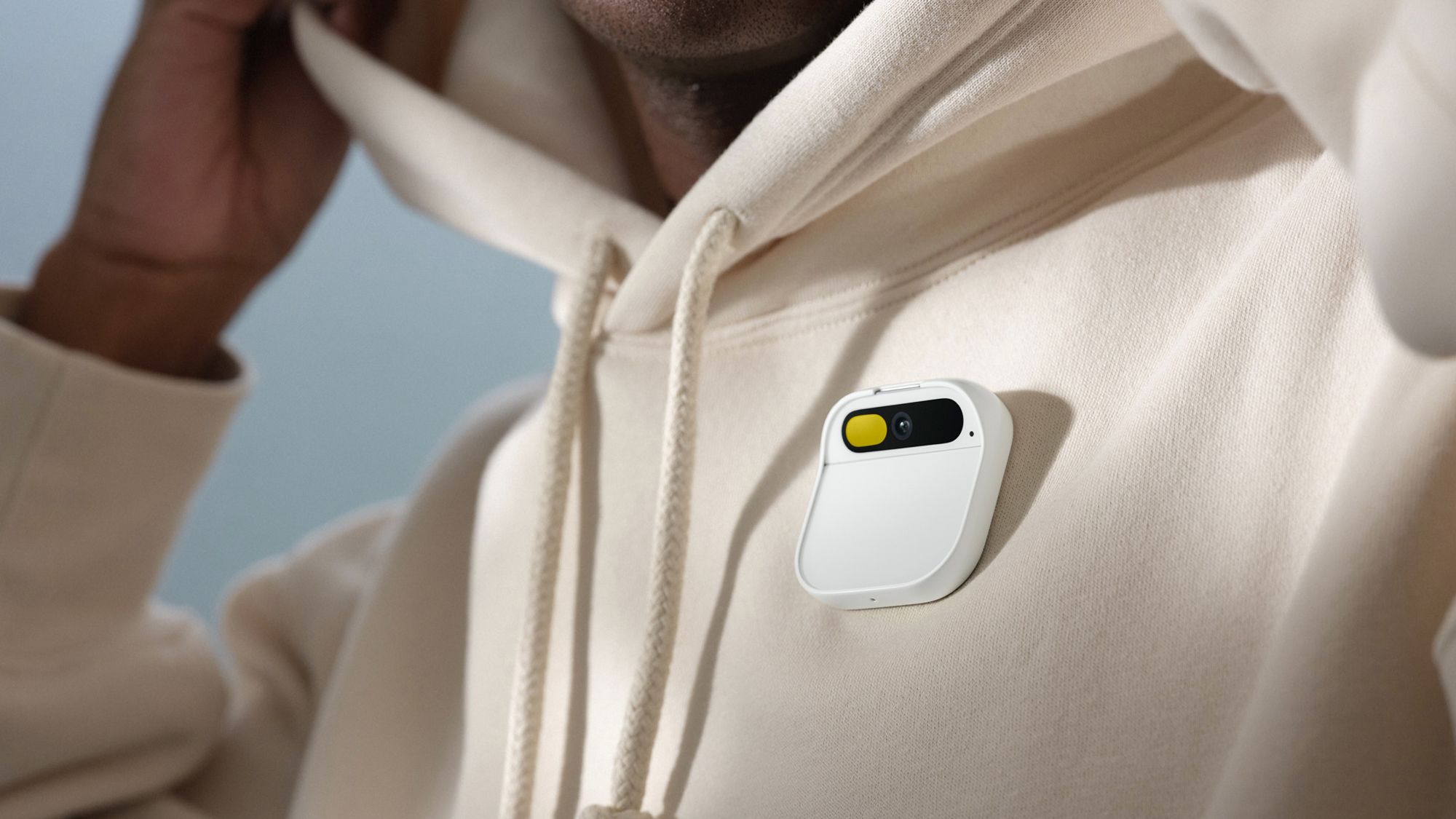
The gadget didn’t resonate with people. Image: wired.com
The key difference in Apple’s approach — the Humane Pin was conceived as a standalone device, while Apple is designing its gadget from the start as an iPhone accessory. This lowers the requirements for hardware, battery, and autonomy, because heavy computations are handled by the smartphone.
However, this doesn’t guarantee success. Humane failed largely because its device couldn’t fully function without a smartphone, even though it was sold as standalone. Apple is at least honest in this regard — but the question remains whether anyone will pay for “yet another way to talk to Siri.”
Apple AI Pin Competitors: OpenAI, AirPods with Camera, and Smart Glasses
The AI Pin is not Apple’s only project in this direction. The company is simultaneously developing two more devices:
- AirPods with an infrared camera — earbuds with a camera that gathers information about the surroundings. AirPods development has progressed further, and the version with a camera could appear as early as this year.
- Smart glasses — a competitor to Meta Ray-Ban. Apple has already handed prototypes to engineers and is targeting a 2027 launch, with production potentially starting in December 2026. The glasses will have an advanced high-resolution camera for photos and video plus a second camera for transmitting visual data to Siri.
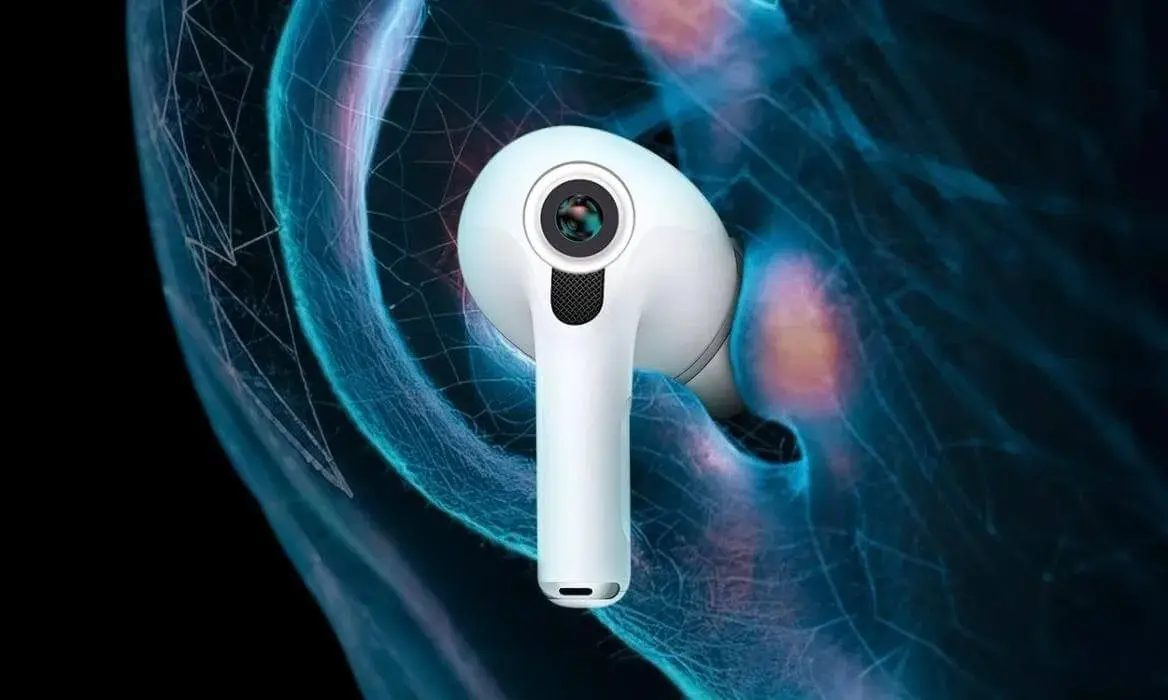
Cameras will even appear in AirPods. Image: beebom.com
Among external competitors — OpenAI together with former Apple designer Jony Ive