If you’ve ever installed an app outside of Google Play, you know that Android makes it easy. Download the APK, confirm, done. But Google believes that such freedom creates too many problems and is introducing a mandatory 24-hour waiting period when installing apps from unverified sources. There’s a tool that allows you to bypass these restrictions, and it’s called ADB. Let’s break down what it is and why in 2026 it’s more important than ever.

Installing apps on Android is possible not only from Google Play, but also via a computer.
What You Need to Know About ADB
Android Debug Bridge, or simply ADB, is a command-line utility that allows a computer to communicate directly with an Android smartphone. You connect your phone via USB or Wi-Fi, open a terminal, and gain access to functions that aren’t available through the regular interface. You can copy files, record the screen, and — what’s especially relevant right now — install apps via APK without any restrictions from Google.
In practice, basic ADB operations are no more complex than copying text from the internet and pasting it into the right window. The difficulty here is more psychological than technical.
Why Google Is Restricting APK Installation
Google has been moving toward a more closed ecosystem for a long time. First came Play Protect, then stricter restrictions on background apps, then the scoped storage system. Now the company is tackling app installation from third-party sources.
The new mechanism offers two paths. The first is to go through an “enhanced process” with a 24-hour waiting period. It’s a one-time setup, but if you forget to do it in advance, you’ll have to wait a full day when trying to install a nightly emulator build. The second path is to enable developer mode and install the app instantly via ADB.
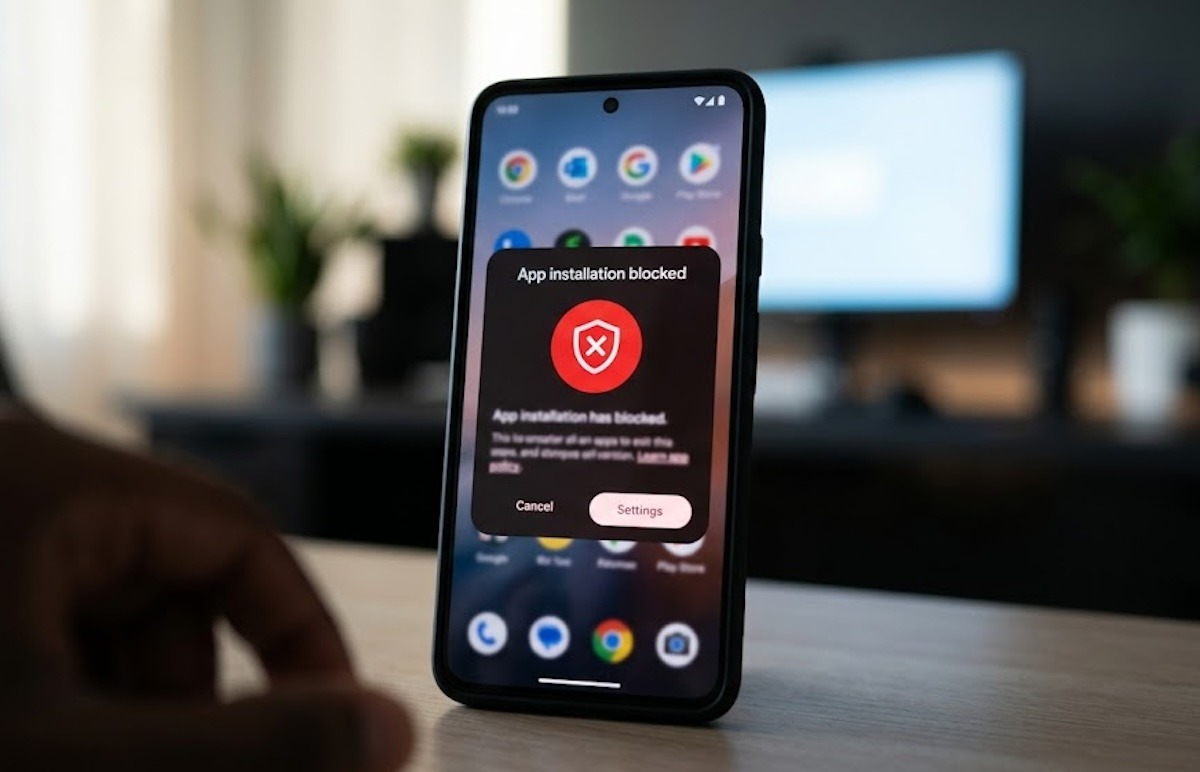
Google is gradually tightening app installation rules
To be honest, the “enhanced process” itself doesn’t seem terrible to me. But the principle raises questions. It means Google is deciding for you which apps you’re allowed to install on your own phone.
Why Advanced Users Need ADB
ADB didn’t appear yesterday — it’s been part of the Android ecosystem from the very beginning. Developers use it for testing apps, enthusiasts use it to install custom ROMs, and tech bloggers (myself included) use it for advanced benchmarking. Through ADB, you can extract data about CPU load, real-time battery temperature, and measure frame rates in games.
But it’s not just about professional use. If you want full control over your smartphone’s software, it all starts with ADB. And in 2026, nothing has changed.
Could Google Shut Down Free App Installation
So far, there are no signs that Google plans to block ADB. The company is trying to find a balance between security for regular users and freedom for advanced ones. But the future is uncertain, especially against the backdrop of the rise of malicious apps created with the help of AI.
As long as ADB is available, Android remains an open platform
Honestly, I don’t want to believe in such a scenario. Android has always distinguished itself from iOS by offering choice. Want security? Install from Google Play. Want to dig deeper? Here’s APK, here’s ADB, here’s bootloader unlocking. If this chain is broken, Android will become something fundamentally different.
Should You Start Using ADB Now
If you only install apps from Google Play and don’t tinker with settings, you don’t need ADB yet. But if you ever install APKs manually or use non-standard utilities, it’s definitely worth learning ADB.
In my case, ADB has long been a working tool that I can’t do without for any serious review. But even if you’re far from tech blogging, the ability to install any app with a single command, bypassing checks and waiting periods, is invaluable. As long as it exists, Android remains an open platform. If it disappears, that will be a completely different story.