
Fatal insomnia can destroy a person in just a few months
In 2024, Spaniard Antonio Lamelas gave an interview that made even seasoned journalists shudder. He revealed that 35 members of his family had died agonizing deaths from the same cause. They simply stopped sleeping. This is not a story about stress or workaholism — it is a chronicle of a disease called fatal familial insomnia, which has haunted his lineage for decades, turning life into torture and the absence of sleep into a deadly enemy.
What Is Fatal Familial Insomnia
Fatal familial insomnia is a prion disease. To put it simply: proteins in the brain begin to misfold, like spoiled milk curdling. These clumps accumulate in the thalamus — the brain region responsible for sleep. Eventually, the region breaks down, and the person permanently loses the ability to sleep.
Neurologist Celia García Malo, who studied the Lamelas family case, explains: this is not just poor sleep, but a complete inability to fall asleep. The brain simply forgets how to do it.
The disease comes in two forms:
- Hereditary — when the mutation is passed down through the family (this is the Lamelas case);
- Sporadic — when it arises on its own, without any apparent cause (an extremely rare variant).
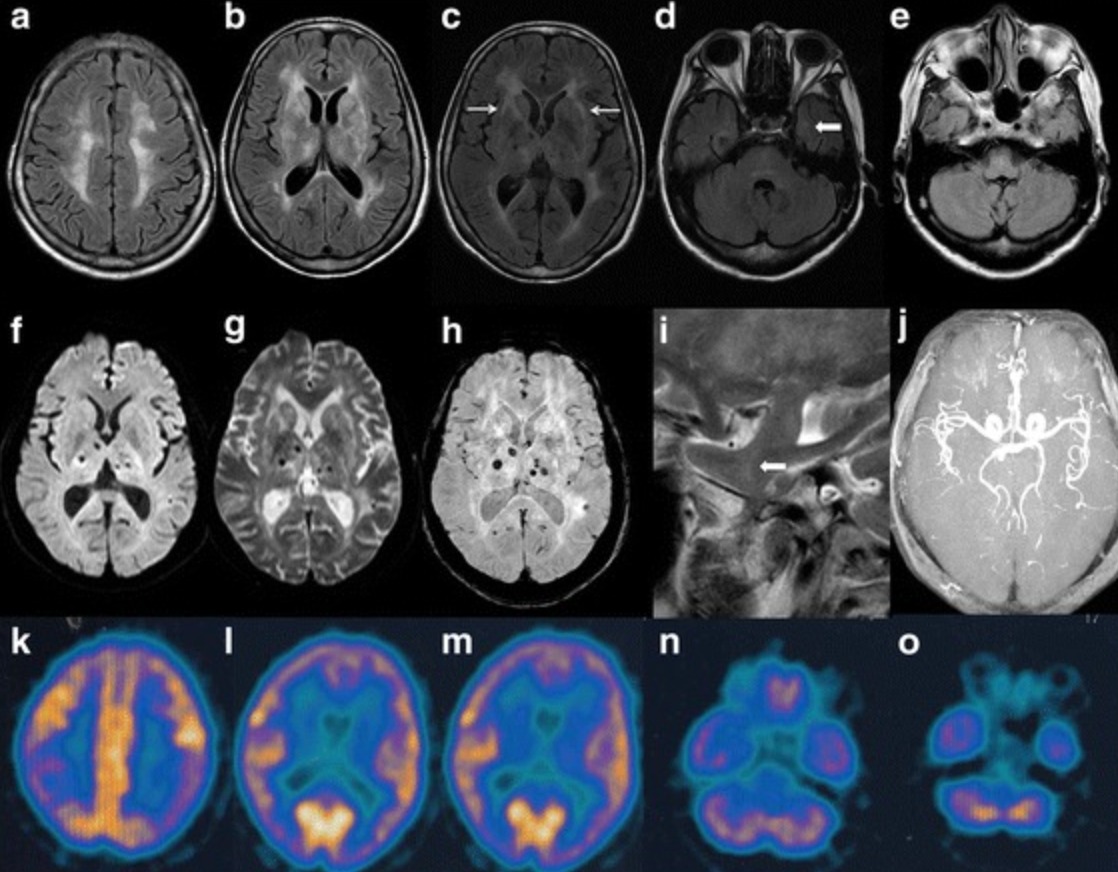
MRI scan of a patient with fatal insomnia. Image source: wikipedia.org
How People Die from Insomnia
The disease creeps up unnoticed. It most often awakens around the age of 50-52, though it can appear earlier — anywhere from 13 to 60. From the first symptom to death, it takes from 7 months to three years. And that time turns into hell.
First Stage (approximately 4 months)
The person simply stops sleeping. First it gets worse, then sleep disappears entirely. Panic attacks and intense fears attach themselves to the insomnia. Doctors often shrug — well, it happens, you’re stressed, take a pill.
Second Stage (approximately 5 months)
The panic becomes unbearable. Hallucinations appear. The person can no longer distinguish reality from the delusions of a sick brain. They get stuck in a strange state between sleep and wakefulness — that same state healthy people feel for a second before falling asleep. Only it lasts for weeks.
Third Stage (approximately 3 months)
Sleep disappears completely. The body rapidly wastes away — the person loses weight before your eyes. The body stops obeying.
Fourth Stage (approximately 6 months)
The patient stops speaking and responding to those around them. They are still alive, but no longer present. Then death comes.
In addition to insomnia, patients develop other symptoms of fatal insomnia:
- Memory falls apart in chunks;
- Muscles twitch on their own;
- The body alternates between drenching sweats and dryness;
- Pupils constrict to pinpoints;
- Blood pressure spikes, the heart races;
- Women abruptly enter menopause, men become impotent;
- The neck stiffens;
- Severe constipation sets in.
Why Fatal Familial Insomnia Cannot Be Treated
Currently, there is no cure for this affliction. Sleeping pills are useless — they simply don’t work because the sleep mechanism itself is destroyed. It’s like trying to start a car without an engine.
There was one case in the United States: a patient self-administered extremely powerful sleep medications. This extended his life somewhat, but did not save him. A temporary reprieve, and nothing more. Scientists are currently working on gene therapy. But so far, these are only experiments.
How Fatal Insomnia Was Discovered
Fatal insomnia was first noticed in 1979. Italian doctor Ignazio Roiter observed a strange pattern: two of his wife’s relatives died one after another from insomnia. The doctor dug into the archives and found medical histories of other members of the same family with exactly the same symptoms.
In 1983, the younger brother of those same sisters fell ill. Roiter was already tracking him like a research subject — recording every day, every symptom. After the patient’s death, his brain was sent to the United States for research.
In the late 1990s, the killer mutation was finally found. On chromosome 20, in the PRNP gene, a defect occurred: one amino acid was replaced by another. Because of this, the protein misfolds and transforms into a prion — an infectious molecule that corrupts other proteins around it. In the thalamus (the sleep center), amyloid plaques begin to grow — those same clumps of misfolded protein. They are what destroy sleep.
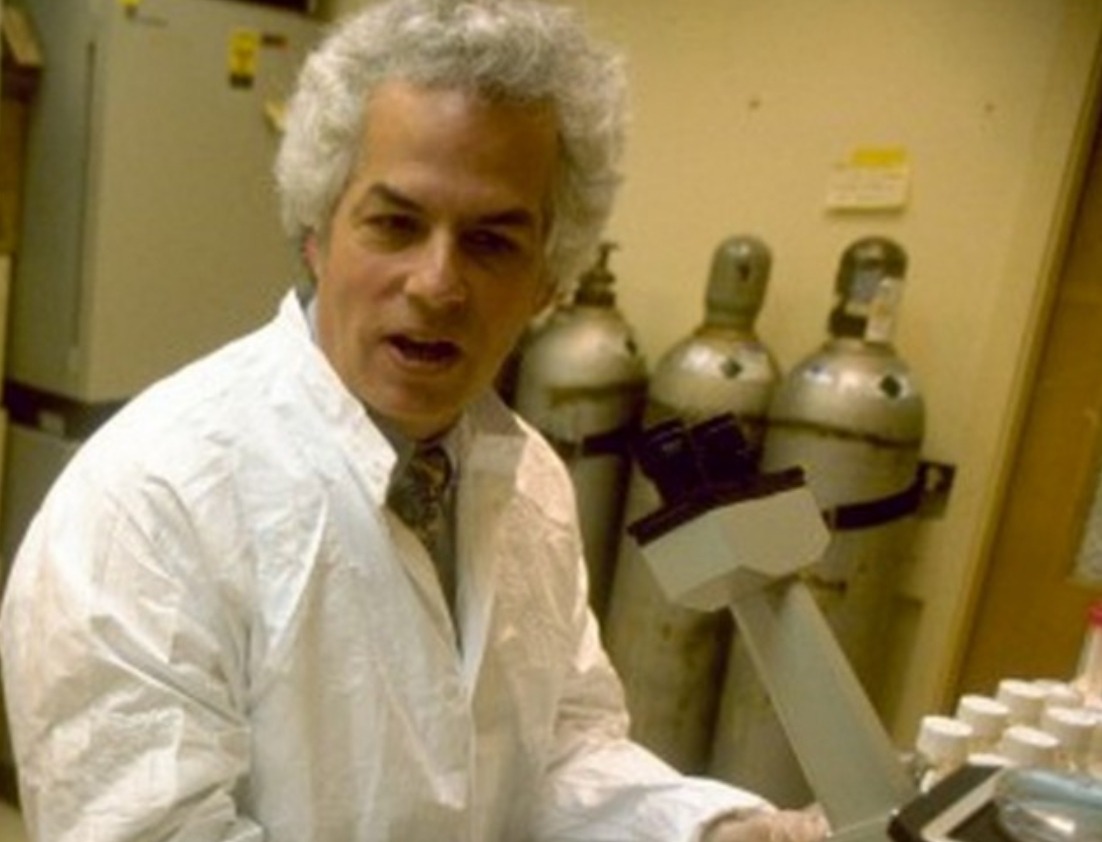
Doctor Ignazio Roiter, who discovered fatal insomnia. Image source: yaplakal.com
Who Can Develop Fatal Insomnia
The disease is inherited. If a parent is affected, children have a 50/50 chance — either you get it, or you don’t. If the parents are healthy, the children will be healthy too. Rare exceptions exist, but those are one-off mutations.
In Antonio Lamelas’s case, the roulette was merciful to him. He is still alive and well. But he has witnessed the deaths of 35 relatives, including his own son. And he knows the gene could awaken at any moment.
Why Fatal Familial Insomnia Is Hard to Diagnose
Fatal familial insomnia masquerades as other diseases. Doctors often confuse it with conditions such as:
- Autoimmune encephalitis (brain inflammation);
- Creutzfeldt-Jakob disease (also a prion condition, but a different one).
Symptoms vary wildly from patient to patient, and there is no clear clinical picture. So by the time doctors figure out what it is, precious time has already been lost.
The Lamelas family is at least fortunate that doctors already know about them. But for an ordinary person with sudden insomnia, the chance of receiving the correct diagnosis right away is minimal.