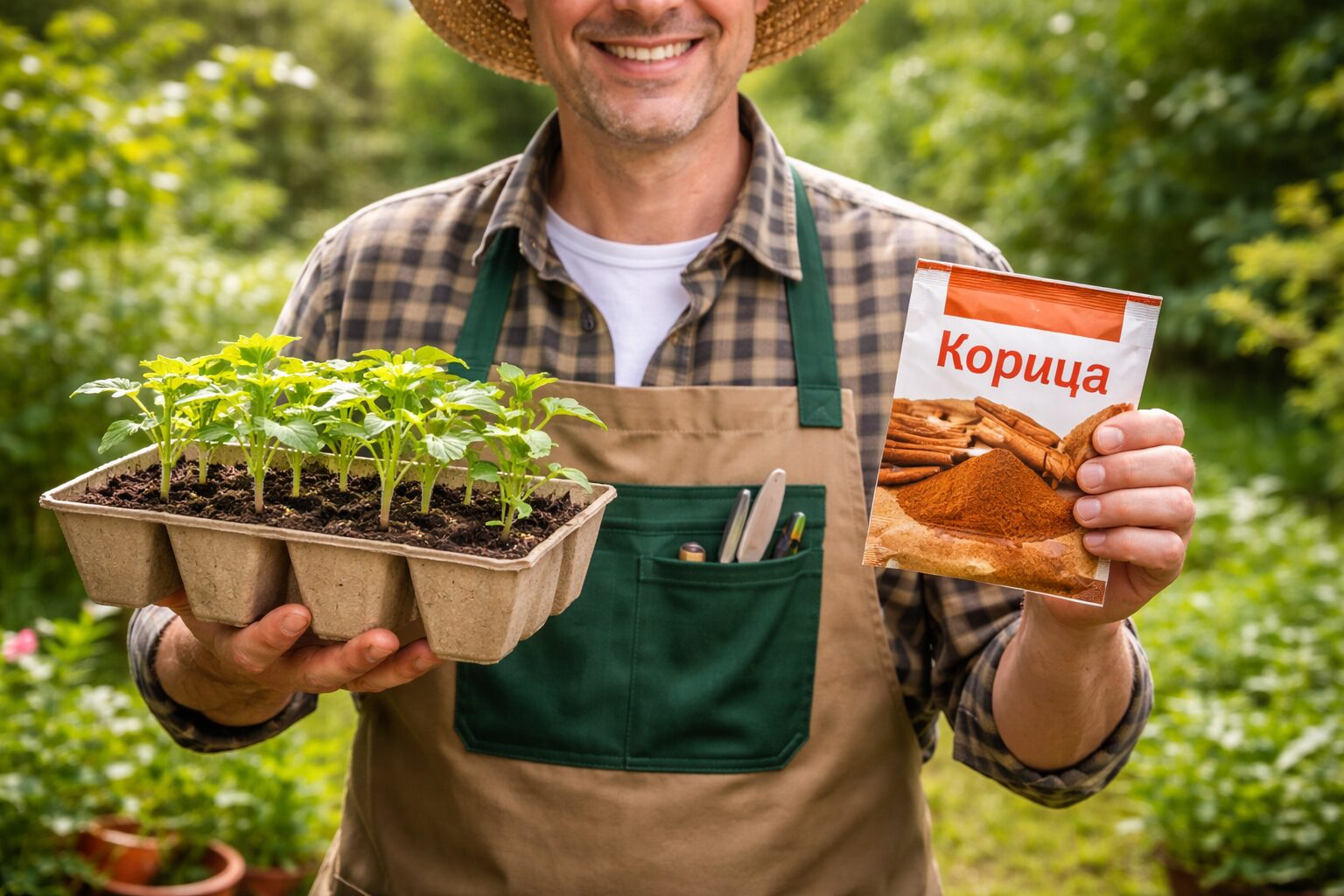
Not all gardeners know that cinnamon is very useful in the challenging work of gardening.
Cinnamon is associated with baking, coffee, and winter desserts, but this spice also has some quite unexpected uses. Some gardeners use it on their plots. The thing is, cinnamon contains strong antimicrobial and antifungal compounds that work not only in the human body but also in the soil. And the best part — you don’t need complicated recipes for this. Sometimes the simplest things work.
Beneficial Properties of Cinnamon for the Garden
Interestingly, in some studies, cinnamon powder showed activity against fungi that cause plant diseases, which is why it is increasingly being used in eco-friendly gardening. Below are 6 unexpected ways to use cinnamon in the garden that can save you money and help preserve your harvest. Plus, it’s environmentally friendly.
How to Use Cinnamon Against Ants and Insects in the Garden
The smell of cinnamon irritates many crawling pests. Ants, earwigs, thrips, mosquito larvae, and other crawling pests try to avoid places where this spice is present. Simply sprinkle ground cinnamon around plants or along the edge of a garden bed to create a natural barrier.
It’s important to understand that cinnamon powder repels rather than kills insects, so it’s better to think of it as a gentle alternative rather than a replacement for pest control products.
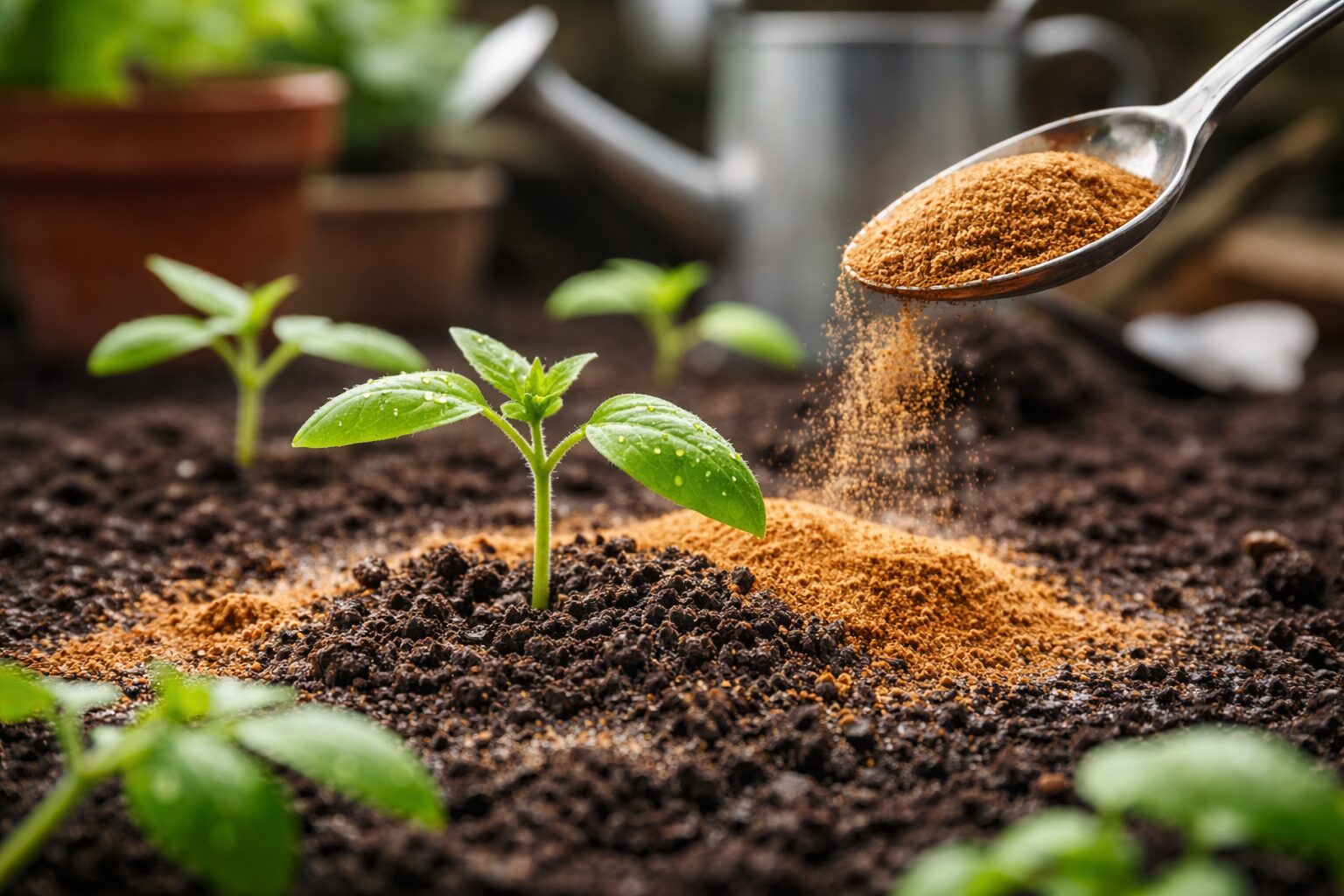
Cinnamon essential oil can be used as an insecticide to combat pests such as ants, mosquito larvae, thrips, and others.
Does Cinnamon Help Repel Mice, Squirrels, and Other Rodents
Squirrels, mice, and rabbits have a very sensitive sense of smell. The strong scent of cinnamon irritates their mucous membranes, so animals try to avoid treated plants.
You can sprinkle cinnamon on the soil near their favorite plants. Or spray them with a weak solution of cinnamon essential oil: a few drops of oil per liter of water (test on 1-2 leaves first, and don’t use in hot weather).
Animals can get used to repellents, so try to change them every couple of weeks. Some natural repellents available in stores also contain cinnamon essential oil along with other ingredients.
Can Cinnamon Be Used Against Fungus and Plant Diseases
Cinnamon is a proven natural antifungal agent that helps with gray mold on strawberries, tomato late blight, and other diseases. Spraying with a spice solution helps here.
The solution is easy to make:
- 1 teaspoon of cinnamon per ~450 ml of water
- let it steep
- shake and spray all leaves and stems
This treatment is often used not only for strawberries and tomatoes but also for ornamental plants.
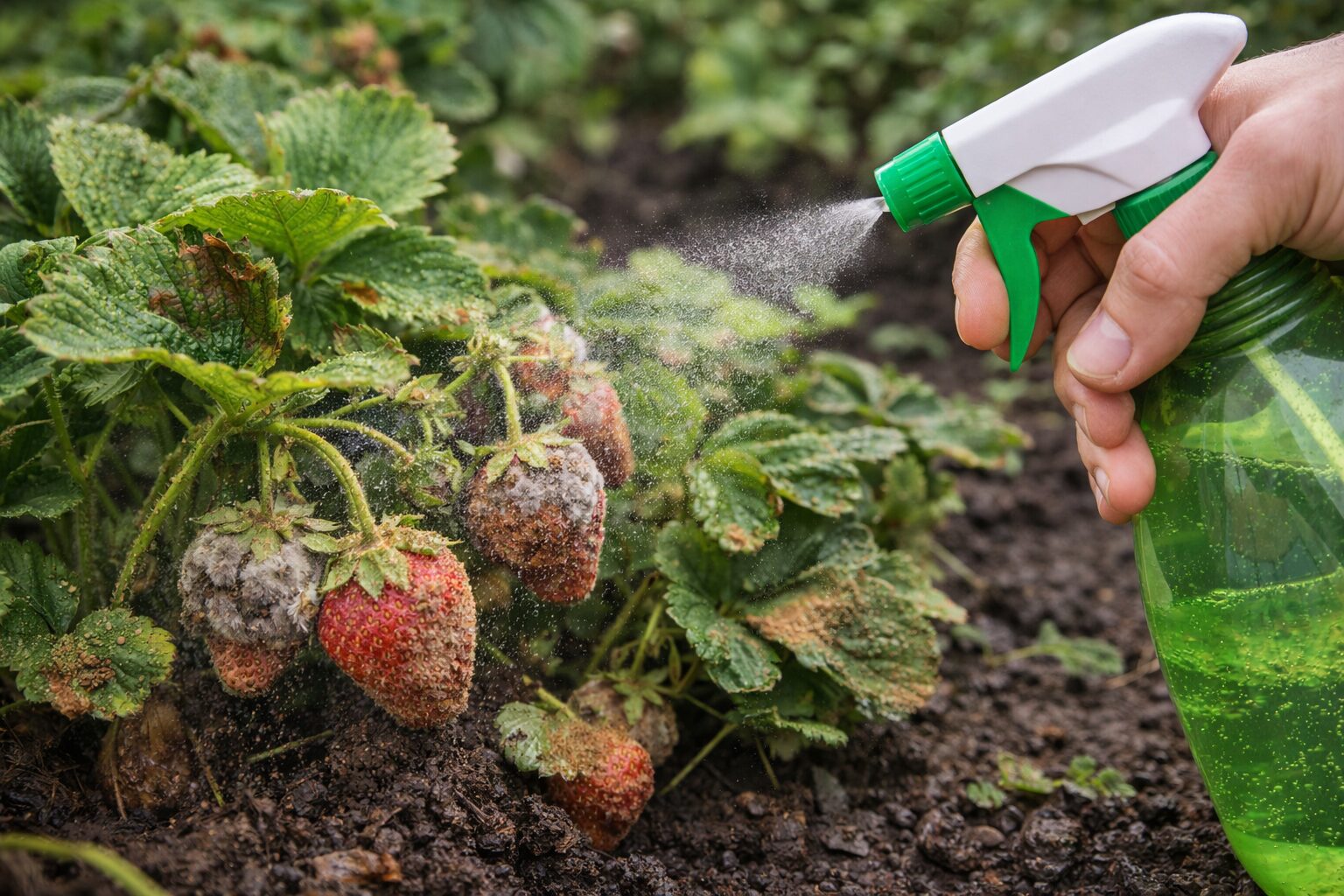
You can treat plants by spraying them with a cinnamon solution diluted in water.
Why Add Cinnamon to Seedling Soil
Thanks to cinnamon’s antifungal properties, gardeners use it to prevent damping-off in seedlings — a fungal disease that causes young sprouts to suddenly die.
Simply:
- add a little cinnamon to the seedling soil mix
- or sprinkle it on the soil surface — when watered, the cinnamon will soak into the soil
How to Use Cinnamon When Rooting Cuttings
Cinnamon doesn’t speed up root growth, but it protects the cut from bacteria and fungi.
Before planting, you can:
- dip the tip of the cutting in cinnamon powder
- plant it immediately in moist soil
This is especially useful when rooting cuttings of perennial and indoor plants.
Can Cinnamon Be Used Against Weeds
Many natural herbicides for weed control use essential oils. You can do something similar with cinnamon essential oil.
Homemade solutions work best on:
- young weeds
- they slow their growth
- but may not destroy their roots if they are already well-developed
Cinnamon cannot fully replace herbicides, but it’s suitable for spot treatment. Although it may be more cost-effective to buy a weed killer at the store.
Cinnamon is a rare example of a kitchen spice that is truly useful in the garden. It won’t replace all protective products, but it can be a simple and safe helper that you often already have on hand. This is especially appreciated by those who try to avoid using chemicals.