Sometimes a single photograph can tell more than an entire article. That’s exactly why the world loves the National Geographic archives: each shot is not just a frame, but a story frozen in time. They capture rare moments of wildlife, human destinies, and events that would otherwise be easily forgotten.
Rare Photographs of Nature, People, and Animals from the National Geographic Archive
In this small selection — five photographs from Nat Geo that show the world from very different angles: friendly whales, people searching for connection, rare apes, a historic couple, and even tiny insects that an entire ecosystem depends on.
Searching for a Signal: Migrants in Djibouti Catching Cell Signal at Night
On a night beach in Djibouti, people raise their phones to the sky. These are migrants from the Horn of Africa — they’re trying to catch a cell signal from neighboring Somalia to contact their loved ones. Every year, more than 100,000 people leave this region in search of work, and staying connected with family becomes their only lifeline to home.
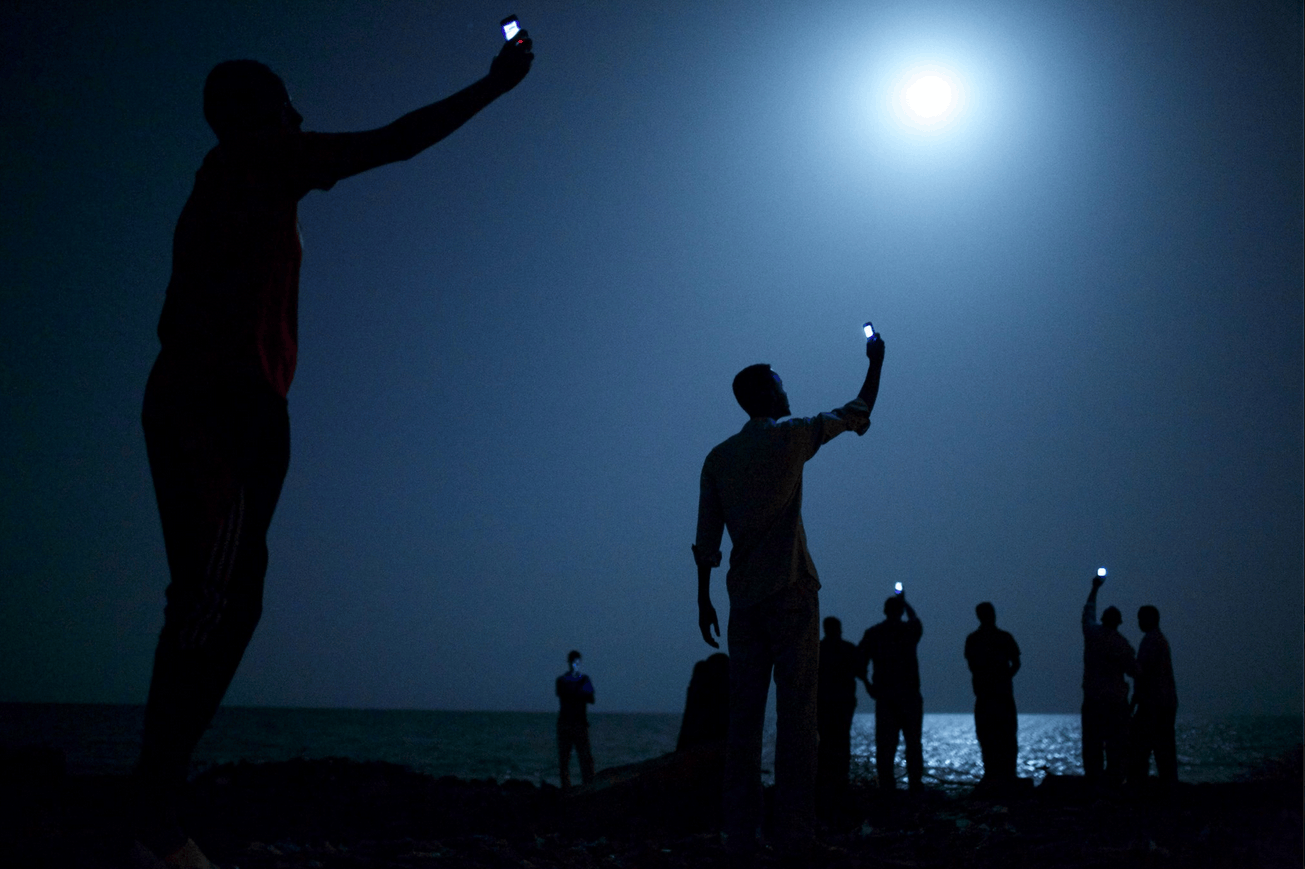
«Signal». Photo: John Stanmeyer. Image source: nationalgeographic.com
Bonobo Love: A Bonobo and a Frog at the Lola ya Bonobo Sanctuary
A bonobo carefully holds a small frog at the Lola ya Bonobo sanctuary in the Democratic Republic of Congo. These rare great apes are found only in the forests west of the Congo River. Their DNA is nearly as close to humans’ as that of chimpanzees, and scientists consider bonobos one of the most empathetic animals on the planet.
New research shows that not only great apes are intelligent — some other animals have also turned out to be much smarter than previously thought.
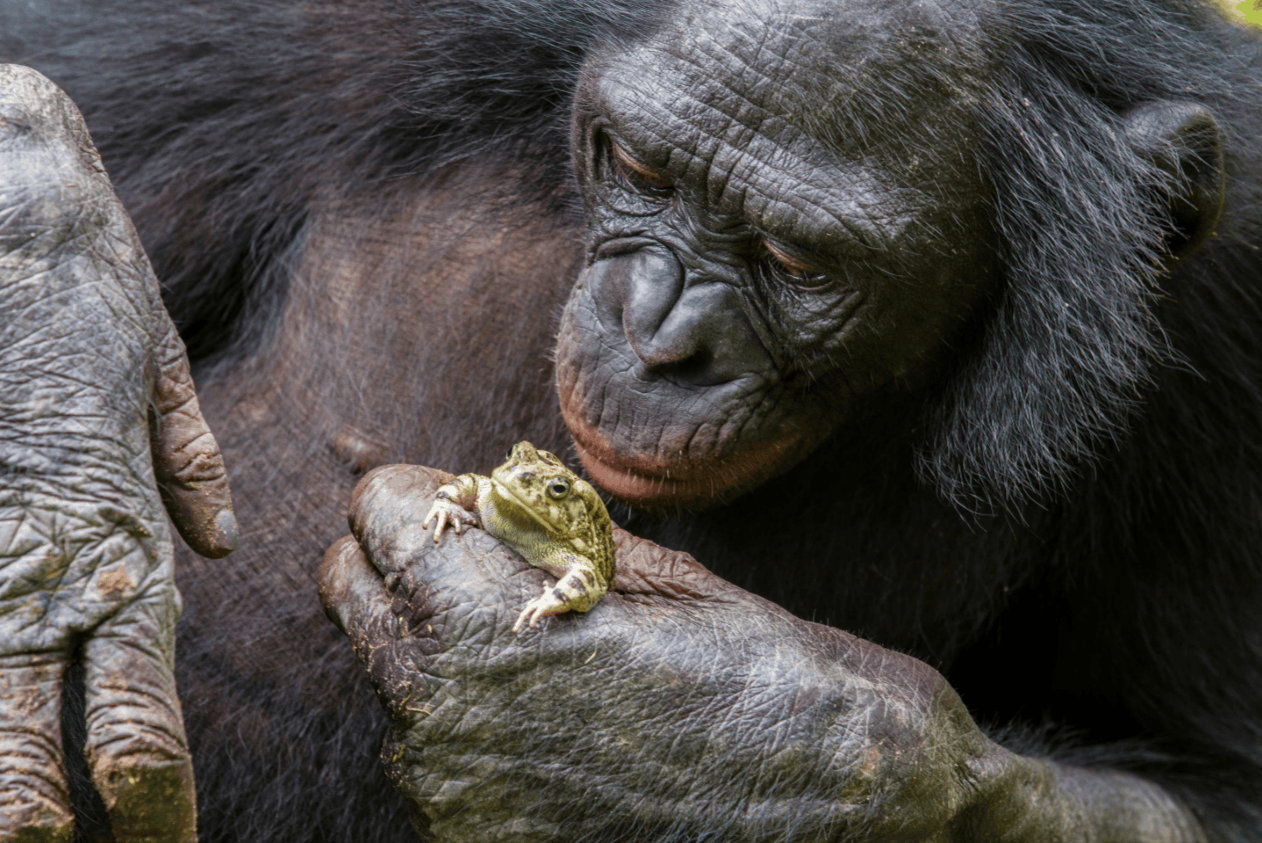
«Bonobo Love». Photo: Christian Ziegler. Image source: nationalgeographic.com
Together in the World: Alexander Graham Bell and His Wife on Sable Island
In an old photograph — Alexander Graham Bell and his wife Mabel, standing by the shore on Sable Island in Canada. The inventor of the telephone was also the second president of the National Geographic Society. In 1898, he traveled to this island to search for friends who had gone missing after a shipwreck — but the search proved unsuccessful.
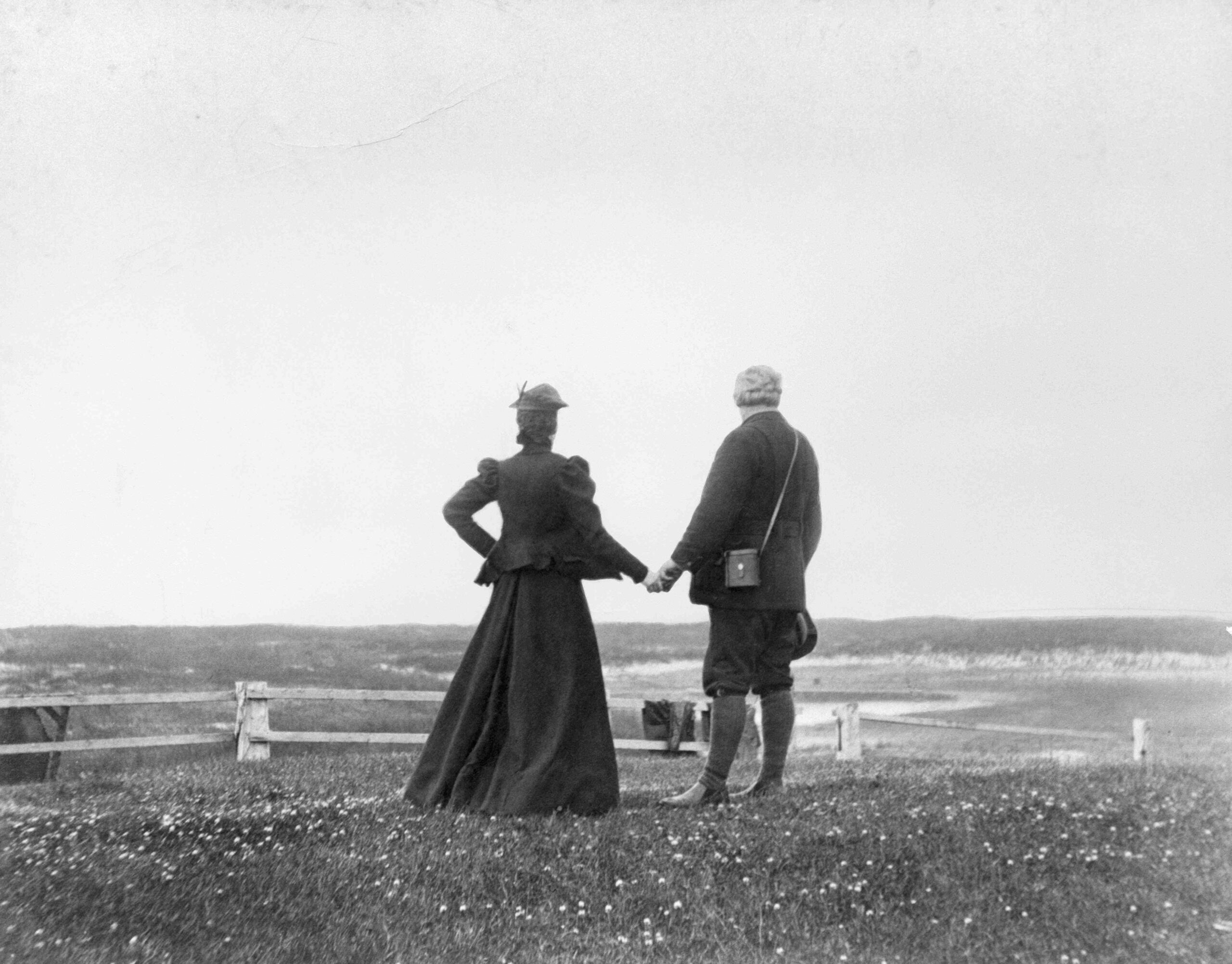
Photo: Arthur W. McCurdy. Image source: nationalgeographic.com
Forest Guardians: Red Wood Ants and Their Role in the Ecosystem
In a shot from Hesse, worker red wood ants are dismantling a blue dung beetle. Despite their tiny size, this species is considered a keystone of the ecosystem: ants regulate insect populations and help recycle organic matter. One of the ants is even breaking off an antenna of the prey with its powerful mandibles.
In general, ants often turn out to be far more important than they appear at first glance — scientists have even calculated how much all the ants on Earth weigh and what an enormous impact they have on ecosystems.
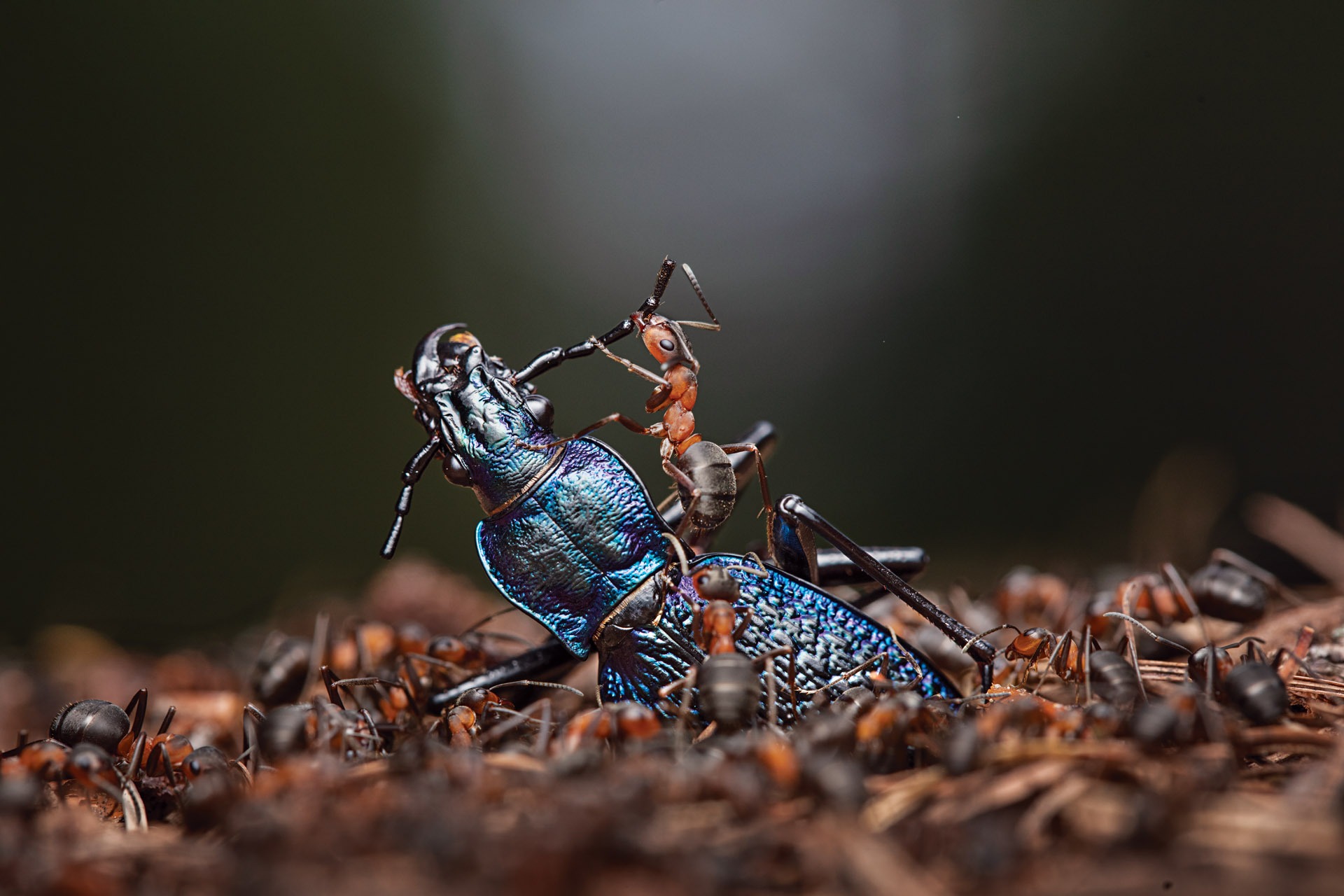
«Forest Guardians». Photo: Ingo Arndt. Image source: nationalgeographic.com
Guardians of the Sea: Gray Whales in San Ignacio Lagoon, Mexico
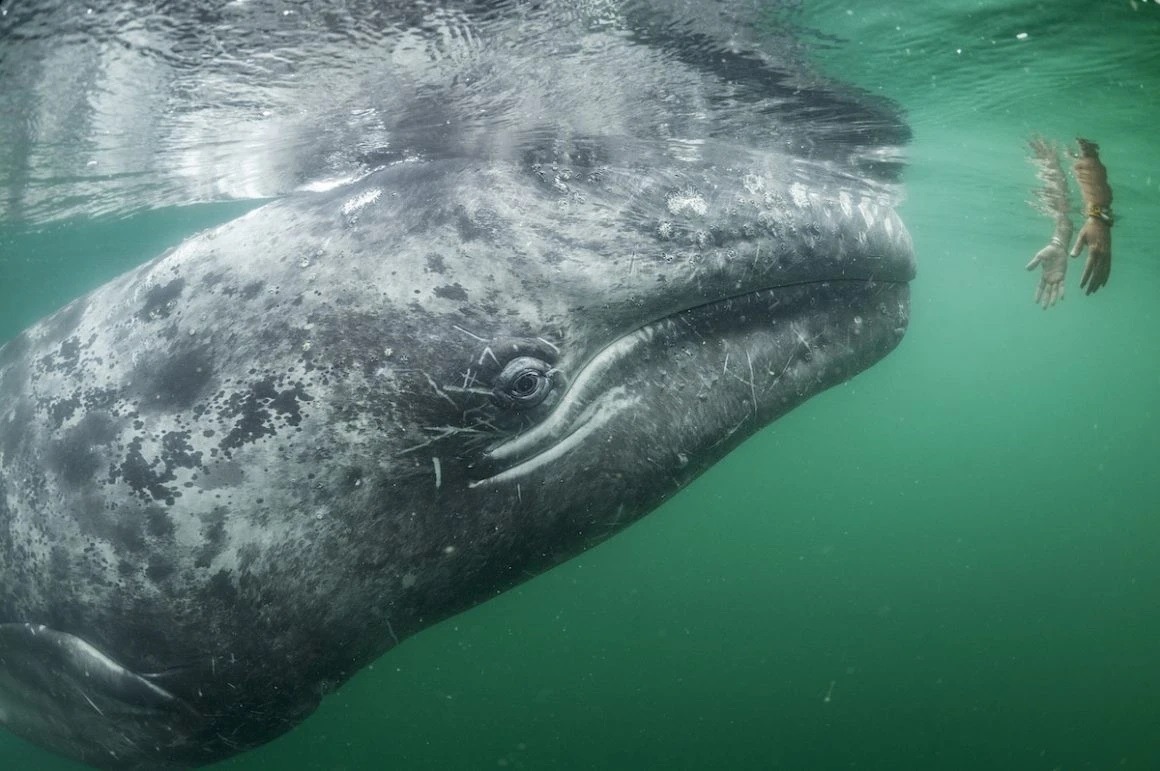
This is the photo you saw on the cover. Stunning, right? A tourist waded into the water in San Ignacio Lagoon in Mexico, hoping to pet a gray whale. These giants are known for their remarkably calm temperament and often swim right up to people. Thanks to this, the lagoon has become an important center for ecotourism and a source of income for local residents.
Interestingly, some whale species can live incredibly long — scientists are still studying how whales manage to live up to 200 years.