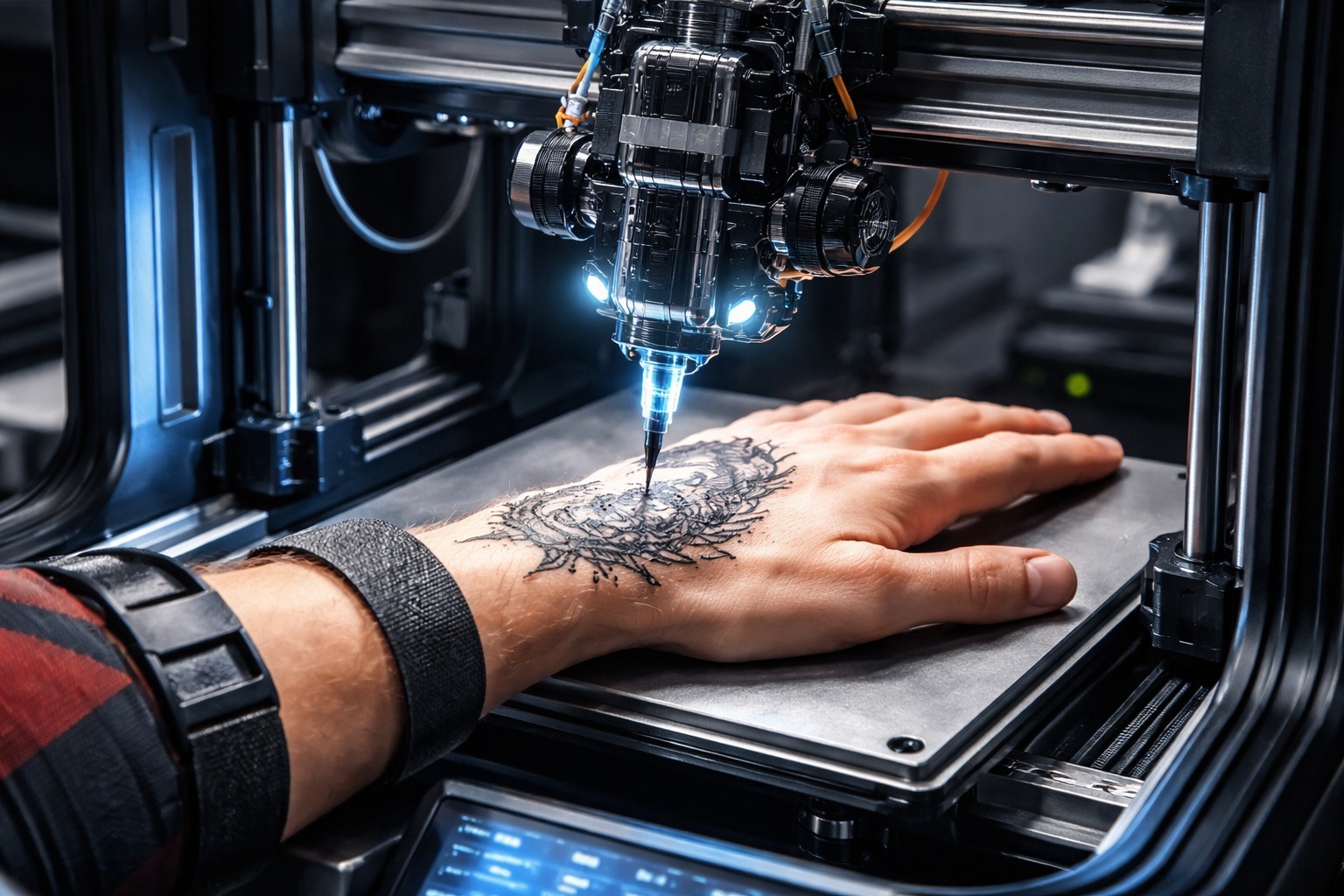
A home 3D printer can be turned into a tattoo machine, but you probably shouldn’t do it
3D printers have long ceased to be exotic: they are used to print prosthetics, rocket parts, houses, and even food. But one crafty engineer decided to go further and turned an ordinary desktop printer into a device that creates real tattoos on human skin. And the result turned out to be surprisingly clean. Arguably even neater than what some human tattoo artists produce.
Tattoo Printer
The engineer who created the 3D tattoo printer is named Emily Yarid. Known on YouTube as Emily The Engineer, she has long been famous for her wild engineering projects. Her channel is a true laboratory of absurd yet functional inventions. She’s one of those people who look at household appliances and think: “What if I made this do something completely different?”
This time, an ordinary 3D printer became the subject of her experiments. The idea seems obvious on the surface: a printer can move its print head along the X, Y, and Z axes with high precision. So what if you replace the extruder with a tattoo needle? Simply put, if the device can apply molten plastic layer by layer, why can’t it inject ink under the skin?
Of course, in practice everything turned out to be much more complicated than in theory. Skin is not a flat plastic platform. It’s elastic, it moves, and it has different thickness on different parts of the body. But Emily is not the type to be stopped by such details.
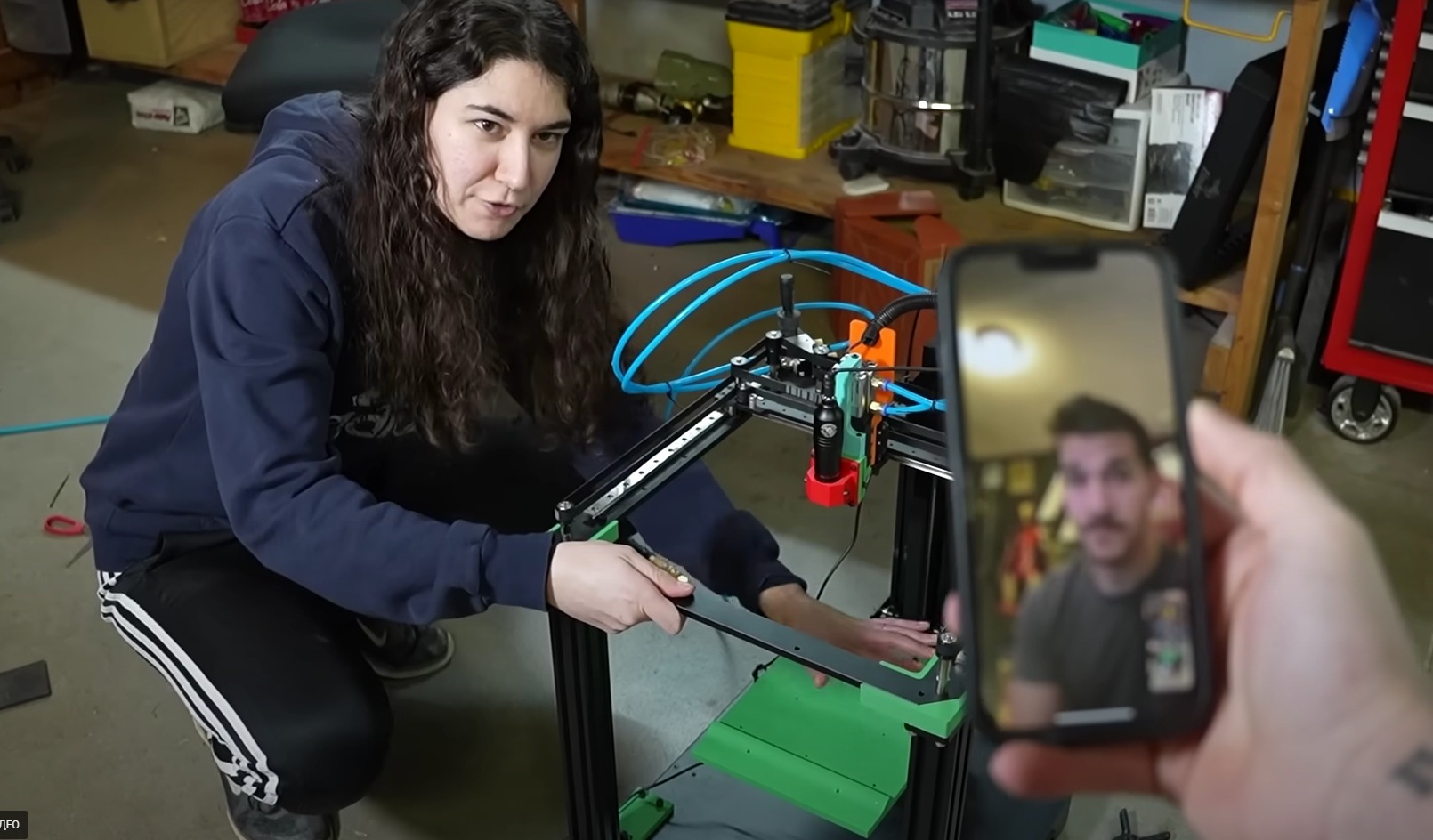
Emily Yarid from the Emily The Engineer channel
How a 3D Printer Became a Tattoo Machine
The conversion process required serious engineering work. Emily replaced the standard extruder with a specially designed tattoo needle holder. The key challenge was controlling penetration depth: the needle must enter the skin to a strictly defined depth — approximately 1–2 millimeters, no more and no less. Too deep means tissue damage; too shallow means the ink won’t hold.
A modified G-code was used for control — the same command language that all 3D printers and CNC machines “speak.” The thing is, standard G-code is designed for printing plastic on a rigid surface, whereas here it was necessary to account for skin pliability and needle strike frequency. Emily wrote her own scripts that converted vector images into a trajectory for the tattoo needle.
Calibration was a separate challenge. Before moving on to live skin, the engineer conducted dozens of tests on artificial skin and fruits. Bananas and grapefruits became the machine’s first “clients” — their texture vaguely resembles human skin in terms of elasticity.
Tattooing with a 3D Printer
The most surprising part was the result. When Emily finally dared to test the device on real skin, the tattoo came out remarkably clean. The lines were smooth, without the characteristic “shakiness” that sometimes appears with manual work. This makes sense: the stepper motors of a 3D printer provide accuracy down to 0.1 millimeters, while the human hand, no matter how steady, still vibrates slightly.
However, there are limitations. The machine can currently only handle outline drawings — black lines without fills or gradients. By comparison, a professional tattoo artist can work with shadows, halftones, and complex color transitions. The automatic printer hasn’t reached that level yet.
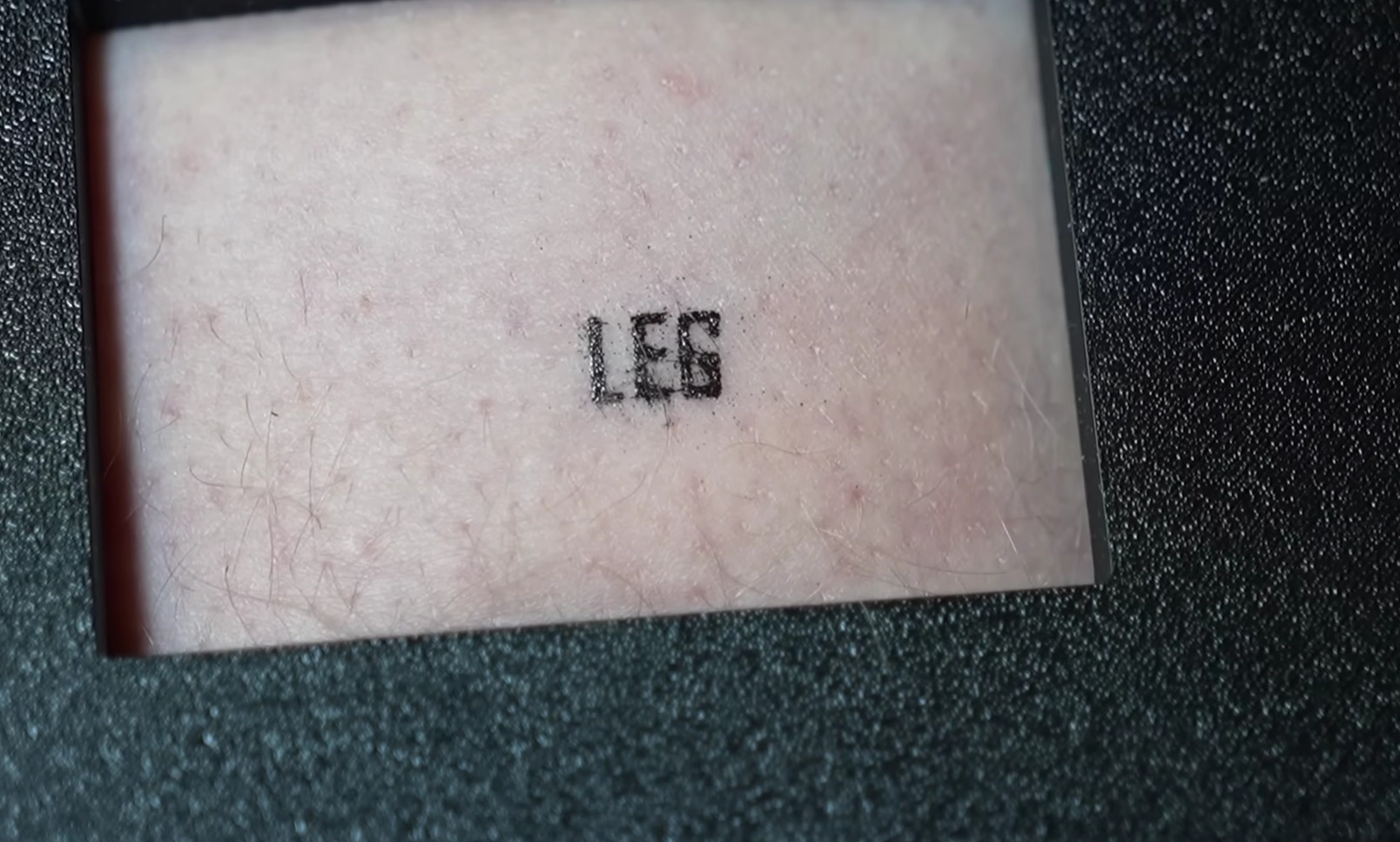
The DIY 3D printer managed to print a word
But here’s what’s interesting: the principle itself works. And that means with sufficient technological development, automatic tattoo machines could become a reality. Not as a replacement for artists, but rather as a tool — just as a milling machine didn’t replace the jeweler but made their work more precise.
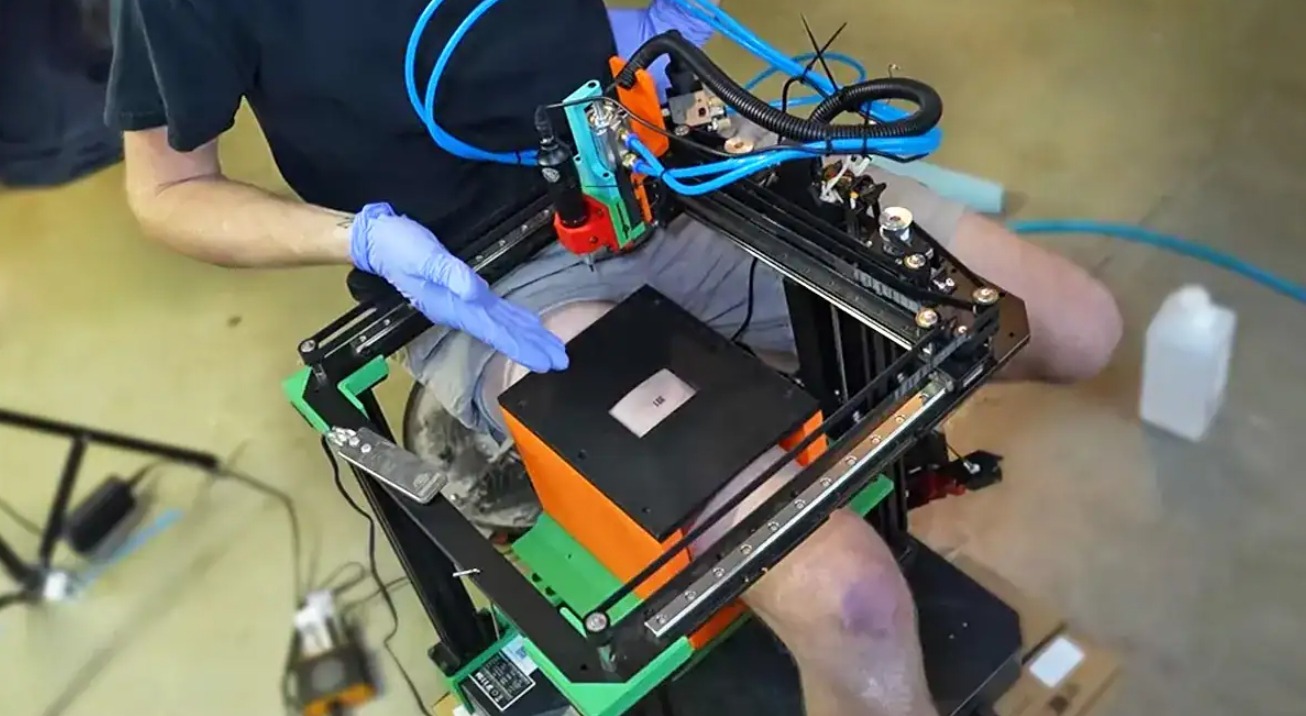
3D printer for printing tattoos. Image source: zmescience.com
Can a 3D Printer Replace a Tattoo Artist
There is no definitive answer to this question yet, but the trend is clear. There are already startups working on commercial robotic tattoo systems. For example, the Dutch company Tatoué presented a prototype of a robotic arm capable of applying tattoos several years ago. But Emily Yarid’s approach is unique in that it’s based on affordable consumer equipment costing a few hundred dollars, rather than an industrial robot.
The main thing to understand is that such projects are not about replacing human craftsmanship. Tattooing is an art, and a significant part of its value lies in the connection between the artist and the client, in the individual approach, in the ability to adapt to a specific person’s anatomy. But for simple designs, medical markings, or, say, applying precise geometric patterns, automation could prove very useful.
There are also safety concerns. Any device that pierces the skin must comply with strict sanitary standards. For now, Emily’s project is a pure DIY experiment, and replicating it at home is strongly discouraged without a deep understanding of both the engineering and medical aspects of the process.