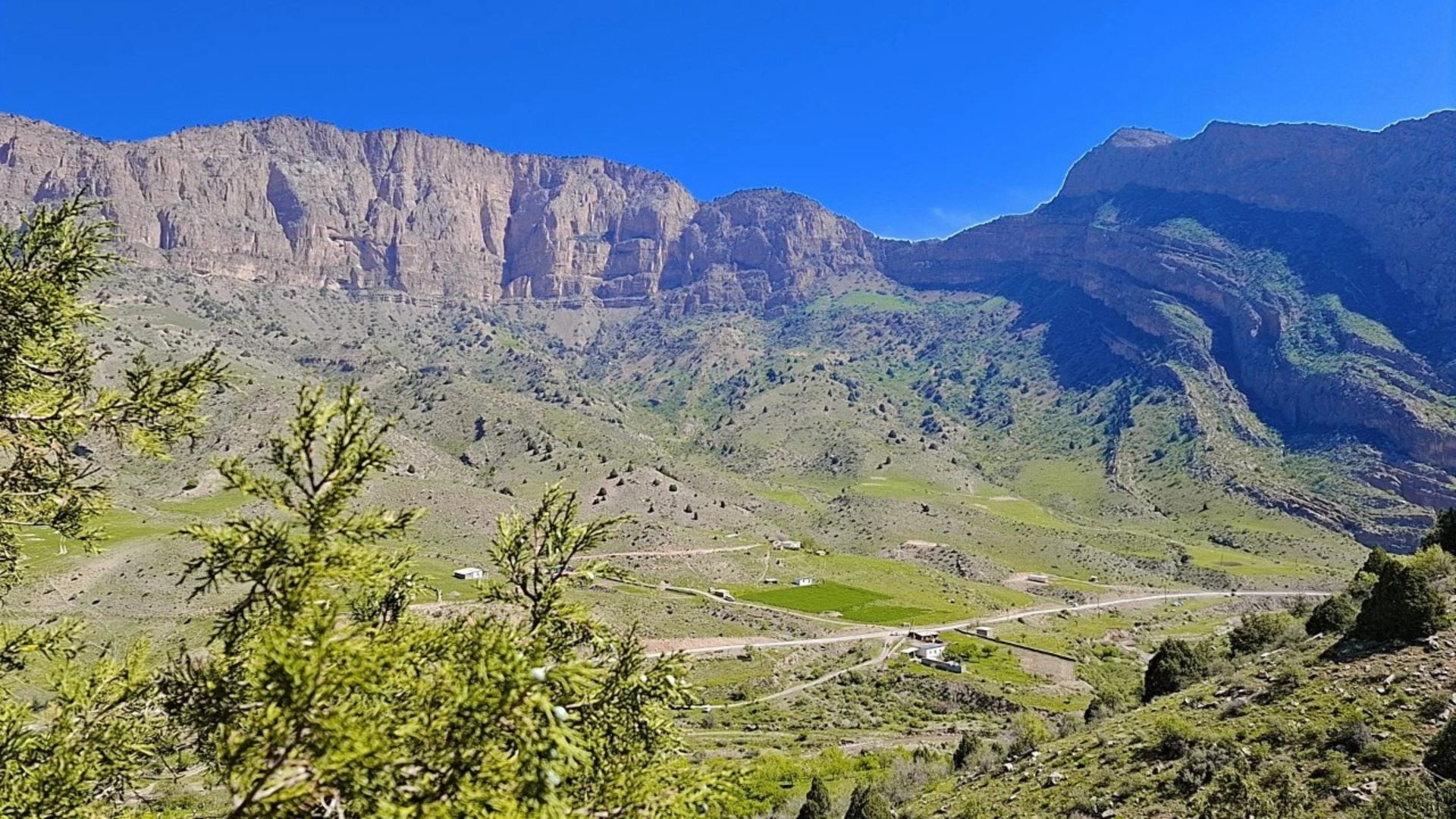
Surkhan State Reserve
In southern Uzbekistan, archaeologists have discovered a three-thousand-year-old city that once stood along the routes of the Great Silk Road. A joint Chinese-Uzbek expedition has for the first time revealed the layout, infrastructure, and daily life of a major settlement from the Early Iron Age, and the finds turned out to be remarkably rich. The city belonged to the Yaz culture — a civilization that many researchers associate with the earliest bearers of Zoroastrian traditions.
Ancient City Found in Uzbekistan
The archaeological site is located in the Surkhandarya region — an area long considered one of the richest in the country in terms of archaeology. The site itself has been known since 1969, but systematic excavations only began in 2023. That year, an international team of scientists commenced full-scale fieldwork. The city is called Bandykhan II.
According to Interesting Engineering, the total area of the ancient city is estimated at approximately 10,000 square meters, but only about 300 square meters have been investigated so far — less than 3%. And even this small fragment showed that the scientists are looking at the largest and best-preserved settlement.
According to radiocarbon dating, the city was founded in the 5th century BCE and existed until the 18th century BCE. The settlement had a roughly square shape and, as expedition member Zhu Jiangsun noted, represents a well-preserved and structurally intact urban center of the ancient Bactrian kingdom.
How the Iron Age City Was Organized
Even excavations of a small area gave scientists an unexpectedly detailed picture of urban life three thousand years ago. Archaeologists discovered the eastern defensive wall with a trapezoidal cross-section, which in some places was preserved to a height of more than two meters. Remarkably, the wall was erected without a foundation trench — wide at the base, it narrowed toward the top, indicating a well-thought-out construction technique.
Inside the city walls, five interconnected rooms were found. One of the rooms was apparently used for sleeping — there was a niche in the wall where an oil lamp once stood. The inner surface of the niche was scorched and covered with soot, indicating repeated and prolonged use. Essentially, this is a domestic detail you can touch three thousand years later — and immediately understand exactly how people illuminated their homes.
The absence of semicircular defensive towers on the outer walls deserves special attention — a detail that distinguishes this city from other known settlements of this period, such as Kuchuk-tepe and Yaz-Depe. This difference may provide scientists with new insights into how approaches to city defense varied within the same culture.
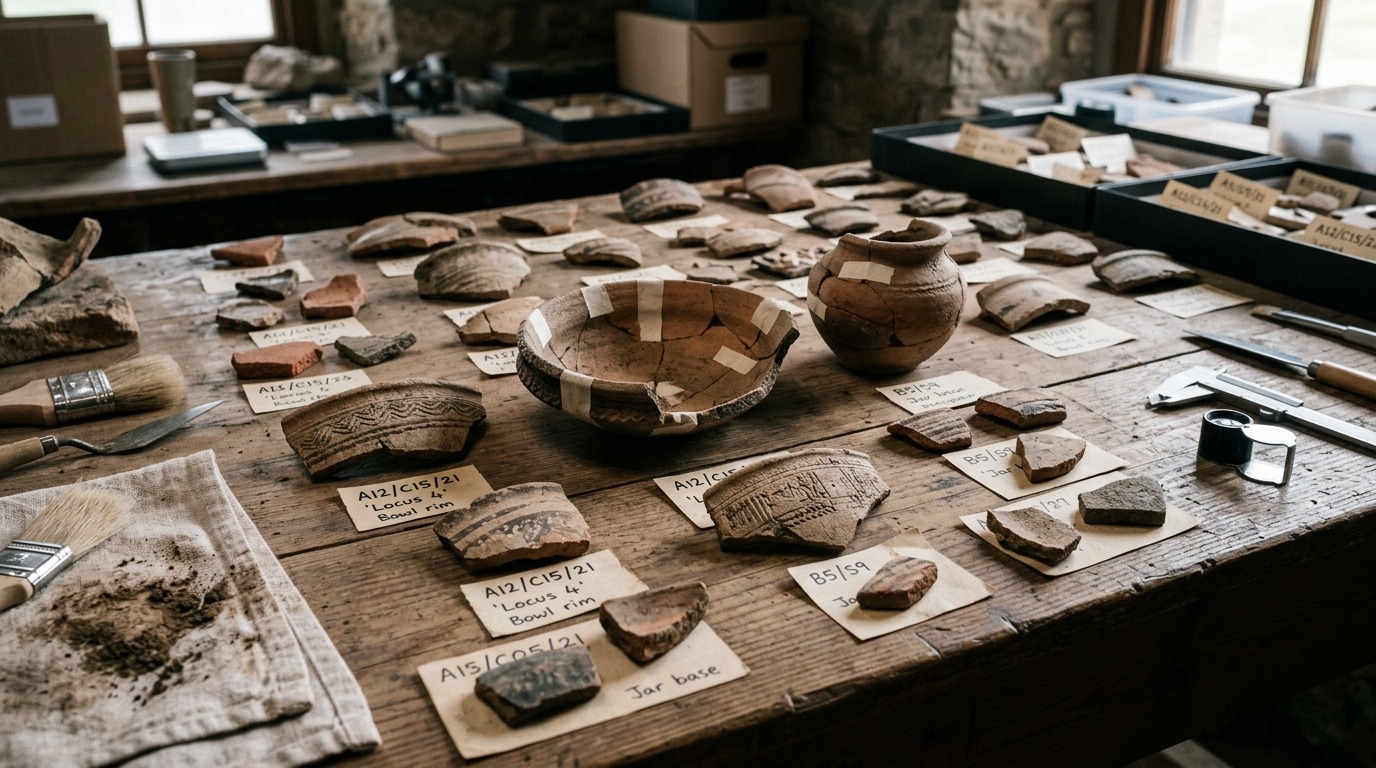
Scientists found ceramic fragments similar to these in the city ruins
What Is the Yaz Culture
The ceramics found at Bandykhan II include pitchers with ribbed walls, bowls, and flat-bottomed dishes. In form, decoration, and manufacturing technique, they match finds from other known Yaz culture sites. This is precisely what allowed archaeologists to confidently attribute the city to the Yaz tradition of the Early Iron Age.
The Yaz culture (named after the Yaz-Depe site in Turkmenistan) is a civilization that existed in the territories of Bactria, Margiana, and Sogdiana from approximately 1500 to 330 BCE. It succeeded the famous Bactria-Margiana Archaeological Complex of the Bronze Age and represents a kind of “bridge” between two eras — from the urban societies of the Bronze Age to the Iron Age with its new technologies and trade routes.
One of the most intriguing features of the Yaz culture is the near-complete absence of burials. Many researchers interpret this as possible evidence of the Zoroastrian practice of “sky burial,” in which bodies were not buried in the ground but left in the open air. The Yasna texts of the Avesta, the sacred book of Zoroastrianism, were apparently created in the territory of these very eastern Iranian lands. So the finds at Bandykhan II are yet another piece of the mosaic of one of the world’s oldest religions.
What Artifacts Were Found During the Bandykhan II Excavations
In addition to ceramics, the excavations yielded a rich set of stone tools: grinding slabs, pestles, mortars, and millstones. All of this indicates that the city’s inhabitants actively processed grain on-site, meaning they practiced agriculture rather than solely engaging in trade.
Bronze objects were also found: knives and arrowheads, as well as seashells. The last detail is particularly curious: the nearest sea is hundreds of kilometers from Surkhandarya, so the shells most likely arrived here via trade routes. This is direct evidence that even a thousand years before the heyday of the Great Silk Road, long-distance trade was already flowing through these lands.
The Surkhandarya region, where Bandykhan II is located, has long been known for its abundance of archaeological sites. It contains numerous ancient mounds and settlements spanning several thousand years — from the Bronze Age to the Kushan era. The ancients called Bactria “the land of a thousand cities,” and excavations show that this was not merely a metaphor.
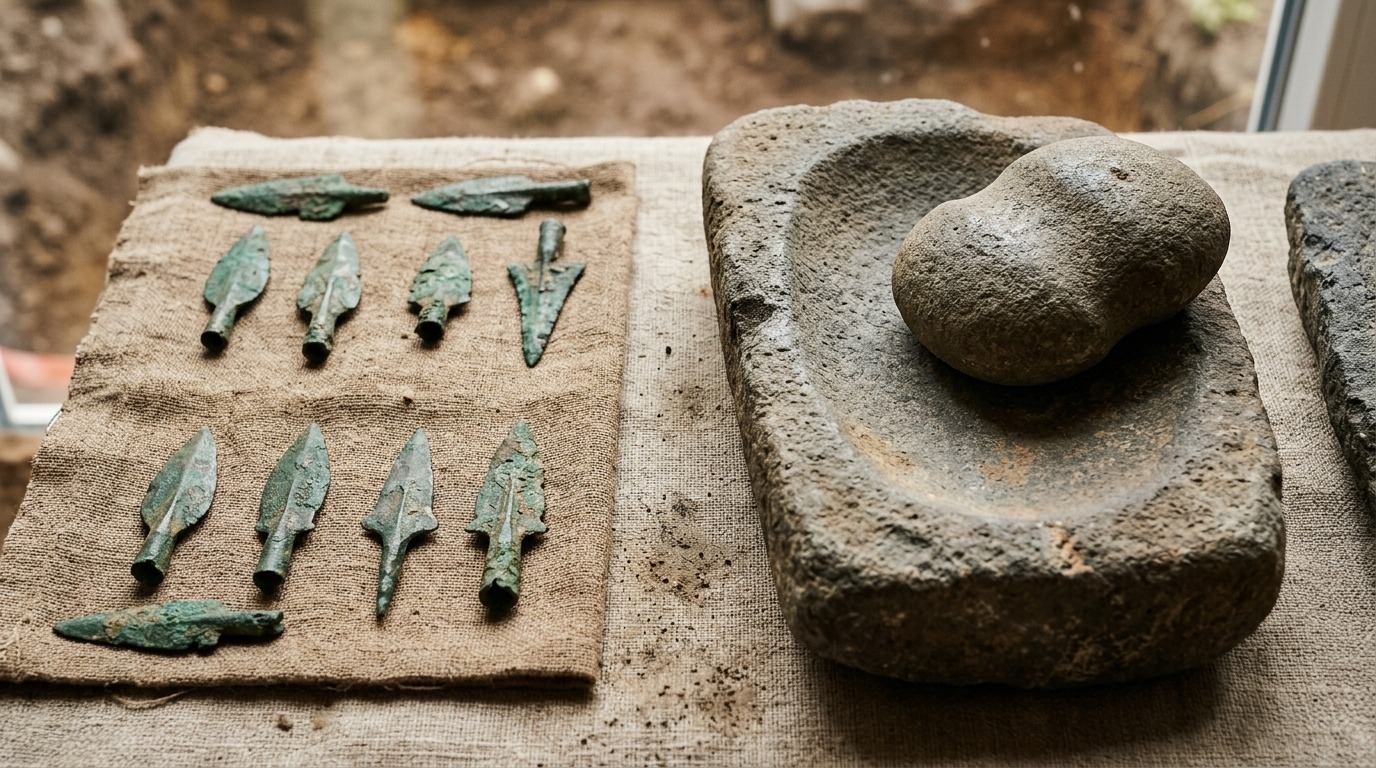
Bronze arrowheads and stone tools — some of the finds from Bandykhan II
What Scientists Plan to Investigate Next
The main point to emphasize is that less than 3% of the city’s territory has been investigated. According to the expedition leaders, they plan to expand excavations in upcoming field seasons. Already, the results allow scientists to better understand what the early city-states of Central Asia looked like and how urban development changed during the transition from the Bronze to the Iron Age.
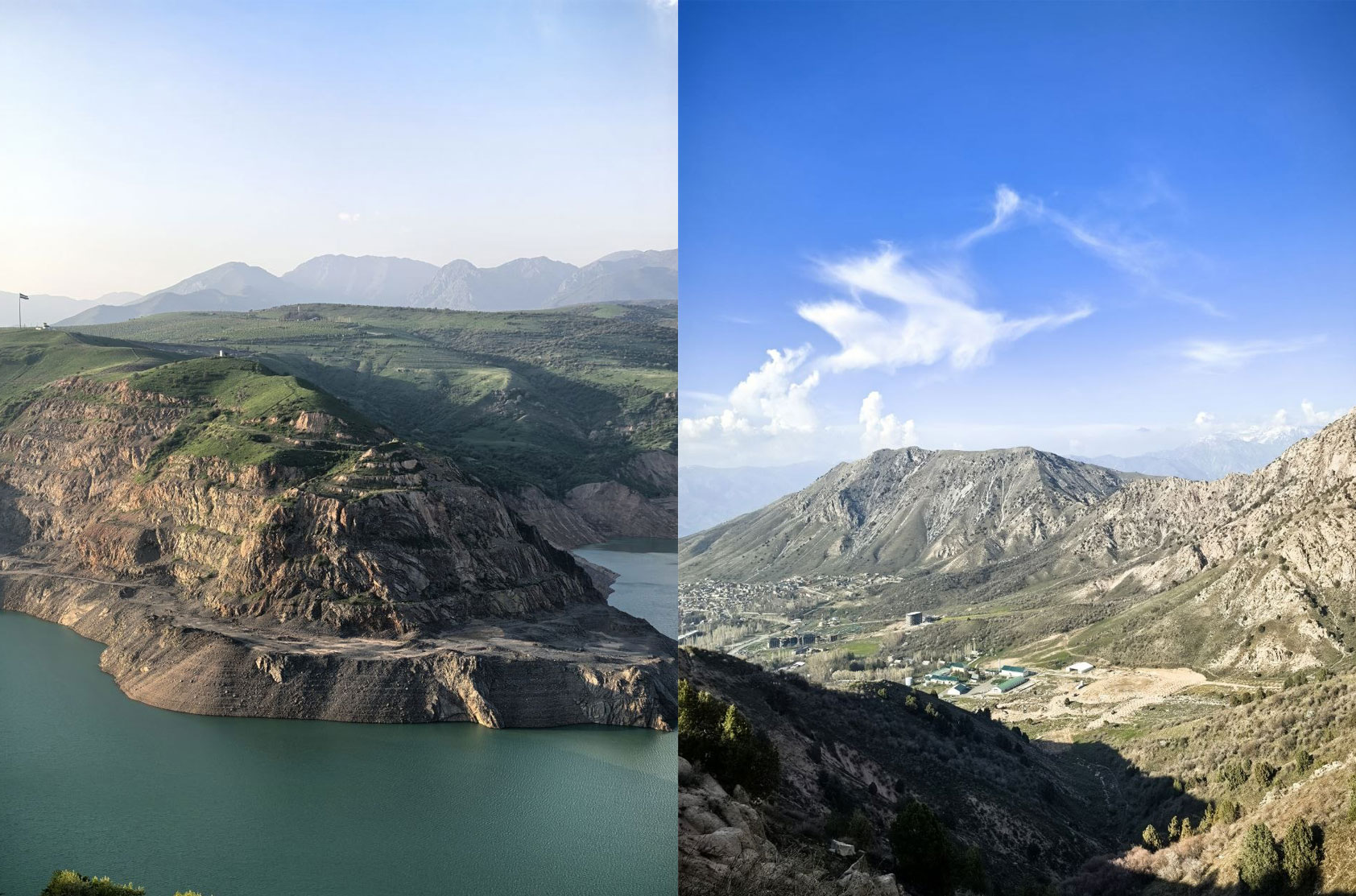
Views of the sites where the ancient ruins were found
Alongside the fieldwork, an educational program is also being developed. In March 2026, a two-week course on Silk Road archaeology, cultural heritage preservation, and scientific methods in archaeology was launched at Termez State University. The program brings together scientists from China and Uzbekistan and includes lectures, laboratory sessions, and field trips.
Bandykhan II is a rare example of how a single archaeological site can simultaneously reveal construction techniques, everyday life, trade connections, and cultural traditions of an entire era. And if excavating just three percent of the area yielded so much, it is hard to even imagine what the remaining 97% conceals. This story is not about a long-dead city, but about a civilization that three thousand years ago created one of the focal points on the route that would later connect East and West.